
If you’ve ever paused mid-day, worried about a change in your discharge, you’re not alone. Almost every woman notices some kind of vaginal discharge at some point – and almost every woman has, at least once, wondered if it’s normal.
The good news is that vaginal discharge is usually your body doing exactly what it’s supposed to do. It’s a natural, healthy process that keeps your reproductive system clean and protected.
But discharge can also change in color, texture, or smell – and sometimes that change is your body’s way of telling you something needs attention. This guide walks you through the different types of vaginal discharge, what each one usually means, and when it’s time to stop guessing and talk to a gynecologist.
What Is Vaginal Discharge, and Why Does It Happen?
Vaginal discharge is fluid produced by glands inside the vagina and cervix. It carries away dead cells and bacteria, which keeps the vagina clean and helps prevent infection.
The amount, texture, and color of your discharge change naturally throughout your menstrual cycle. Hormones – mainly estrogen – control most of these changes.
This is why discharge right after your period can look completely different from discharge just before ovulation. Both can be perfectly normal.
Types of Vaginal Discharge: What Each Color Usually Means
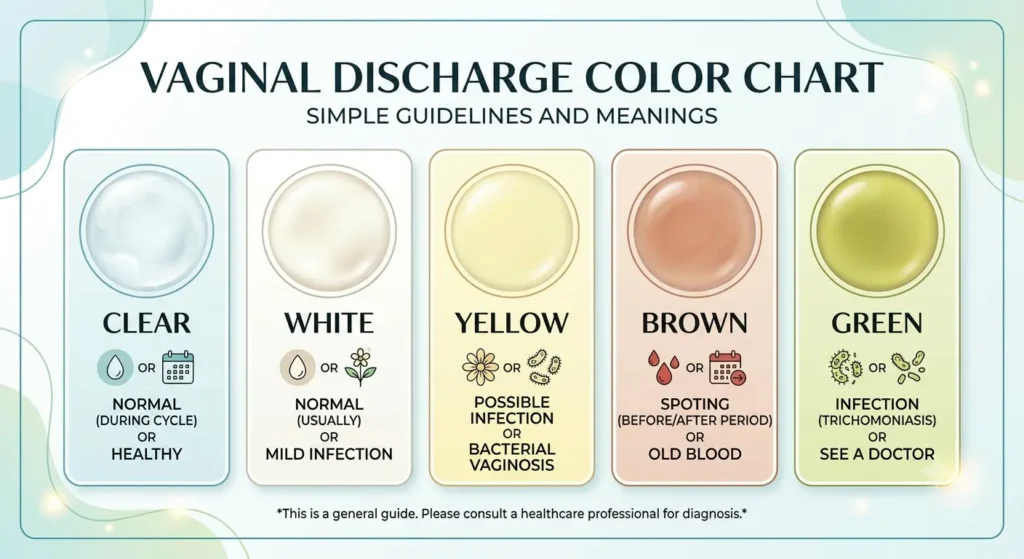
Discharge color is one of the most useful clues your body gives you. Here’s a breakdown of the most common types of vaginal discharge and what they typically indicate.
Clear or Slightly White Discharge
Clear discharge, sometimes with a faint white tinge, is usually a sign of healthy, normal vaginal function. Its consistency often shifts from thin and stretchy around ovulation to thicker afterward.
This clear discharge meaning is one of the most searched questions online, largely because it can look different from day to day within the same cycle. As a general rule, if it’s odorless and doesn’t come with itching or irritation, there’s nothing to worry about.
Watery Discharge Before Period
Many women notice watery discharge before period days. This usually happens because estrogen levels shift as your body prepares for menstruation.
Watery discharge before period is typically thinner than the discharge you’d see mid-cycle. It’s rarely a cause for concern on its own, but it’s worth noting if it suddenly increases in volume or develops a strong odor.
Thick White Discharge
Thick, white discharge is common in the days leading up to your period, and it can also appear during pregnancy or with hormonal birth control use.
However, thick white discharge causes aren’t always this simple. If the discharge looks like cottage cheese and comes with itching, burning, or redness, it could point toward a yeast infection rather than a normal hormonal shift.
Yellow Discharge
A pale yellow tinge can sometimes be within the range of normal, especially when discharge is exposed to air and oxidizes slightly.
That said, yellow discharge causes also include bacterial infections, especially when the color is a deeper yellow and accompanied by an unusual smell, itching, or discomfort while urinating. This combination is usually a signal to get checked.
Brown Discharge
Brown discharge is most often old blood leaving the body, which is why it commonly shows up right at the start or the tail end of your period.
Brown discharge causes can also include implantation bleeding in early pregnancy, or irregular shedding related to hormonal birth control. Occasional brown discharge is rarely worrying, but frequent or unexplained brown discharge deserves a conversation with your doctor.
Green or Grey Discharge
Green or grey discharge is not part of the normal range and is one of the clearer signs of an infection, often a sexually transmitted infection or bacterial vaginosis.
This type of discharge usually comes with a strong odor and should be evaluated by a gynecologist rather than managed at home.
Is White Discharge Normal? A Quick Word
White discharge, in particular, raises the most questions – because it shows up so often and can look so different from woman to woman. We’ve put together a detailed, dedicated guide answering exactly that question: Is White Discharge Normal? Here’s How to Tell.
That guide covers the specific signs that separate everyday white discharge from an infection, so we won’t repeat it all here. Read it alongside this one for the complete picture.
When Vaginal Discharge Signals a Problem
Not every change in discharge needs medical attention, but certain signs are worth taking seriously. Watch for a combination of the following:
- A strong, fishy, or foul odor
- Itching, burning, or swelling around the vagina
- Pain during urination or intercourse
- Discharge that is green, grey, or frothy
- Discharge accompanied by pelvic pain or fever
One or two of these on their own may not mean much. Several appearing together is a stronger signal that it’s time to see a doctor rather than wait it out.
Vaginal Discharge at Different Life Stages

During Pregnancy
Discharge often increases during pregnancy due to rising estrogen and increased blood flow to the pelvic area. A thin, milky white discharge is common and generally harmless.
However, pregnant women should watch for discharge that is unusually heavy, foul-smelling, or tinged with blood, especially alongside cramping, since these can sometimes be early warning signs worth discussing with your obstetrician.
Right After Your Period
It’s common to notice brown or dark discharge for a day or two after your period ends, as the body clears out the last of the menstrual blood. This typically resolves on its own within a couple of days.
Around Ovulation
Discharge around ovulation tends to become clearer, thinner, and more stretchy – often compared to raw egg white. This is one of the most reliable natural signs that ovulation is happening.
When to See a Gynecologist
You don’t need to wait for symptoms to get severe before seeking advice. It’s worth booking a consultation if you notice:
- A sudden or persistent change in discharge color, texture, or smell
- Discomfort, itching, or burning that doesn’t go away in a few days
- Discharge that affects your daily life or confidence
- Any discharge changes during pregnancy that concern you
At Divine Women’s Hospital in Ahmedabad, our gynecology team regularly helps women make sense of exactly these kinds of changes. A simple examination is often all it takes to get clarity – and, if needed, the right treatment plan tailored to you.
We’d always rather you ask a question that turns out to be nothing than stay silent about something that needed attention.