
Fibroid Treatment in Ahmedabad
Periods heavy enough to plan your week around. A dragging heaviness low in the abdomen. Pressure on the bladder, or difficulty conceiving - with a scan that mentions fibroids.
Fibroids are extremely common and often need no treatment at all. What matters is where they sit, how large they are, what symptoms they are actually causing, and whether you are planning a pregnancy.
At Divine Women's Hospital, Ahmedabad, Dr. Devang Patel, Gynaecologist and Laparoscopic Surgeon, assesses all four before recommending anything - including recommending nothing.

The uterus is an important organ for women’s reproductive health, as it regulates menstruation, pregnancy, and hormone levels. Fibroids grow within or around the uterus.
What is Fibroid?
Fibroids, also known as uterine fibroids or leiomyomas, are small tumors that grow within or around the uterus. They are composed of muscle and fibrous tissue and range in size from miniature seeds to large masses capable of stretching the uterus. Fibroids are common, affecting 70-80% of women by the age of 50, however not all of them feel symptoms.
Types of Fibroids
Fibroids can form in several regions of the uterus, including the cervix, which is the bottom section of the uterus that connects to the vagina. Here are the main types of fibroids according to their location:
- Intramural Fibroids: The most frequent kind, which develops within the uterine muscle wall. If they grow to a large size, they can cause the uterus to expand.
- Subserosal Fibroids: These develop on the uterine surface and can occasionally become large enough to make the uterus appear larger on one side.
- Submucosal Fibroids: These form right below the uterine cavity lining and can disrupt the uterus’ natural function, perhaps compromising fertility and producing heavy menstrual flow.
- Cervical Fibroids: Cervical fibroids develop in the cervix. Although uncommon, they can produce symptoms such as irregular bleeding, pain during intercourse, and urinary problems.
- Pedunculated Fibroids: These can develop on a stalk either inside the uterus (pedunculated submucosal fibroids) or on the outside (pedunculated subserosal fibroids).
Symptoms of fibroids
Fibroids can cause a variety of symptoms, although other women might not suffer from any at all. Common symptoms include heavy menstrual bleeding, pelvic pain or pressure, frequent urination, difficulty releasing the bladder, constipation, pain during intercourse, enlarged abdomen, and back pain.
What are the causes and risks associated with fibroids?
- Hormonal Factors: Estrogen and progesterone, which manage the menstrual cycle and encourage the development of fibroids.
Genetic Changes: Many fibroids have different genes than normal uterine muscle cells. - Growth Factors: Substances that assist the body maintain tissues, such as insulin-like growth factor, may influence fibroid growth.
- Extracellular Matrix (ECM): ECM causes cells to cling together like mortar between bricks and is enhanced in fibroids, making them fibrous and promoting their growth.
- Heavy menstrual bleeding: It can cause anemia due to considerable blood loss.
- Pelvic Pain and Pressure: Large fibroids can cause discomfort in the pelvis, lower back, and legs.
- Bladder and Bowel Dysfunction: Fibroids pressing on the bladder may lead to frequent urination, while those pressing on the abdomen may cause constipation.
- Reproductive Issues: Can affect conception and pregnancy, possibly resulting in issues such as miscarriage, preterm birth, and labor difficulties.
- Impact on Quality of Life: Symptoms can interfere with daily activities, job, and emotional well-being.
How to Diagnose Fibroids ?
Fibroids are commonly detected during a normal pelvic examination. If fibroids are suspected, a variety of diagnostic tests can be performed:
- Ultrasound: Ultrasound is the most commonly utilized imaging technique to confirm the presence of fibroids.
- Magnetic Resonance Imaging (MRI): This can provide more specific information on fibroid size and location.
- Hysterosonography: It is a specialized ultrasound method that uses saline to expand the uterine cavity for a better picture.
- Hysteroscopy: It is a procedure in which a tiny camera is put into the uterus to directly view the fibroids.
- Hysterosalpingography: It is an X-ray procedure that involves injecting a contrast material into the uterus and fallopian tubes to detect abnormalities. It can reveal uterine abnormalities, such as fibroids.
Treatment Options for Fibroid:
Treatment for fibroids is determined by the severity of symptoms, the size and location of the fibroids, and the woman’s desire to have children in the future. Options include:
- Hormone Therapy: Birth control pills and other hormone drugs can help manage excessive bleeding and pain.
- Gonadotropin-Releasing Hormone (GnRH) Agonists: These can help reduce fibroids by lowering estrogen and progesterone levels.
- MRI-Guided Focused Ultrasound Surgery (FUS): It is a non-invasive procedure that uses high-frequency sound waves to eliminate fibroid tissue.
- Uterine Line Elimination: Small particles are injected into the uterine arteries, cutting off the fibroids’ blood supply and causing them to shrink.
- Laparoscopic or Robotic Myomectomy: It involves the removal of fibroids using small abdominal incisions.
- Hysteroscopic Myomectomy: It is the removal of fibroids through the vagina and cervix with a hysteroscope.
- Abdominal myomectomy: An open operation that removes fibroids while keeping the uterus.
- Hysterectomy: Removal of the uterus, which is a definitive treatment for fibroids but makes the patient unable to give birth to children.
Laparoscopic Treatment for Fibroids
Laparoscopy is a minimally invasive surgical procedure used to remove uterine fibroids, also known as laparoscopic myomectomy. This method includes making small incisions in the abdomen and removing the fibroids using specialist devices while maintaining the uterus. It provides various advantages, including shorter recovery times and less scarring, making it a popular choice among many women.
Are you suffering from fibroids? Dr. Devang Patel at Divine Women’s Hospital is the best laparoscopic surgeon for fibroid treatment. Dr. Patel’s extensive knowledge and dedication to patient care make it possible for him to use advanced laparoscopic procedures to efficiently treat fibroids with minimum pain and fast recovery times. His expertise helps for the exact removal of fibroids while protecting healthy tissue, providing a less unwanted alternative to standard surgery. Trust Dr. Devang Patel with your fibroid treatment and experience the benefits of expert care and new surgical techniques.
Fibroid Treatment Cost in Ahmedabad
What treatment costs depends on the severity of the condition, the treatment required and the complexity of any procedure.
| Treatment | Estimated cost range |
|---|---|
| Medical management (hormonal therapy, pain relief) | ₹10,000 – ₹50,000 per year |
| Laparoscopic surgery | ₹50,000 – ₹1,50,000+ |
Costs depend on the severity of the condition, the treatment required and the complexity of any procedure. Follow-up consultations and ongoing management are additional. These are indicative ranges rather than a quotation - you are given a written estimate for your own treatment after your consultation and scans.
Fibroid Treatment Specialist in Ahmedabad

At Divine Women's Hospital, Ahmedabad, fibroid treatment is decided by what the fibroids are doing, not simply by their presence on a scan. Many need monitoring rather than surgery.
Dr. Devang Patel is a Gold Medalist in M.D. Obstetrics & Gynecology and an experienced laparoscopic surgeon. Where surgery is appropriate, the aim is to treat the fibroids while preserving the uterus wherever that is possible and sensible.
Divine Women's Hospital provides gynaecological care with a focus on minimally invasive surgery and women's reproductive health.
A fibroid on a scan is not automatically a fibroid that needs removing.
If heavy periods or pelvic pressure are affecting your life, an evaluation is the place to start.
Frequently Asked Questions
No. Many fibroids cause no symptoms and are simply monitored. Treatment is considered when they cause heavy bleeding, pain or pressure, when they are affecting fertility, or when they are growing quickly.
Why families across Gujarat trust Divine Women's Hospital
Choosing where to be cared for is a personal decision, and it usually comes down to one question: will someone actually listen to me? At Divine Women's Hospital, that is where every consultation begins. Our senior consultants stay with you from the first visit through recovery, so you never have to repeat your story to a new face.
One consultant, start to finish
The doctor who examines you is the doctor who plans your treatment and performs your procedure. Continuity is not a luxury here, it is the baseline.
Explained in plain language
Reports are walked through line by line, in Gujarati, Hindi or English, until the plan makes sense to you and the family member sitting beside you.
Modern theatre and imaging under one roof
Laparoscopy suites, fetal-medicine grade ultrasound, NICU support and 24x7 emergency cover mean fewer referrals and less waiting between steps.
Honest, itemised costs
You receive a written estimate before admission. If the plan changes, we tell you why before anything is done.
Related Articles
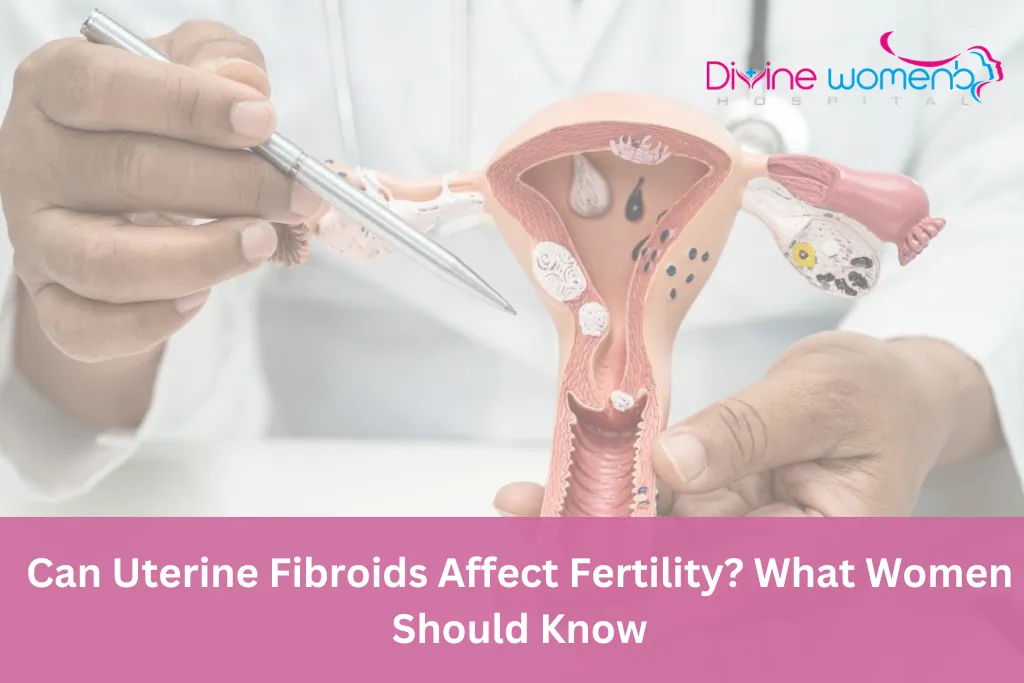
16 June 2026
Can Uterine Fibroids Affect Fertility? What Women Should Know
For many women, discovering they have uterine fibroids can raise concerns about future pregnancy plans. One of the most common questions gynecologists hear is: Can fibroids cause infertility? While not all fibroids affect reproductive health, certain types and locations can interfere with conception and pregnancy.
Read more
20 January 2026
Fibroids and Fertility: Effects on Conception and Pregnancy
Uterine fibroids are a common gynecological condition affecting many women of reproductive age. While fibroids are non-cancerous growths, they can sometimes influence a woman’s ability to conceive and carry a healthy pregnancy. Understanding the relationship between fibroids and fertility is especially important for women planning pregnancy or experiencing fertility challenges in Ahmedabad.
Read more
6 September 2025
Fibroid Awareness & Modern Treatment Options: An Ahmedabad Patient’s Guide
Uterine fibroids are one of the most common health concerns affecting women today. While they are usually non-cancerous, fibroids can cause heavy menstrual bleeding, pelvic pain, frequent urination, and sometimes fertility problems. In a growing city like Ahmedabad, more and more women are seeking awareness and advanced solutions to manage fibroids effectively.
Read moreWe are here for you
Book a consultation with Ahmedabad's trusted women's health team
Internationally certified obstetricians, gynecologists and fertility specialists, available 24×7 for you and your baby.