
Underwater Birth Facility in Ahmedabad Gujarat's First, Led by Dr. Devang Patel
Warm water eases labour pain, helps you move freely, and lets many women labour with far less intervention. For the right pregnancy, it is a genuinely different birth experience.
It is also not right for everyone, and part of good care is being honest about which pregnancies are suitable - and which are not.
At Divine Women's Hospital, Ahmedabad, Dr. Devang Patel leads Gujarat's first underwater birth facility, with a temperature-controlled pool and a theatre ready on site.
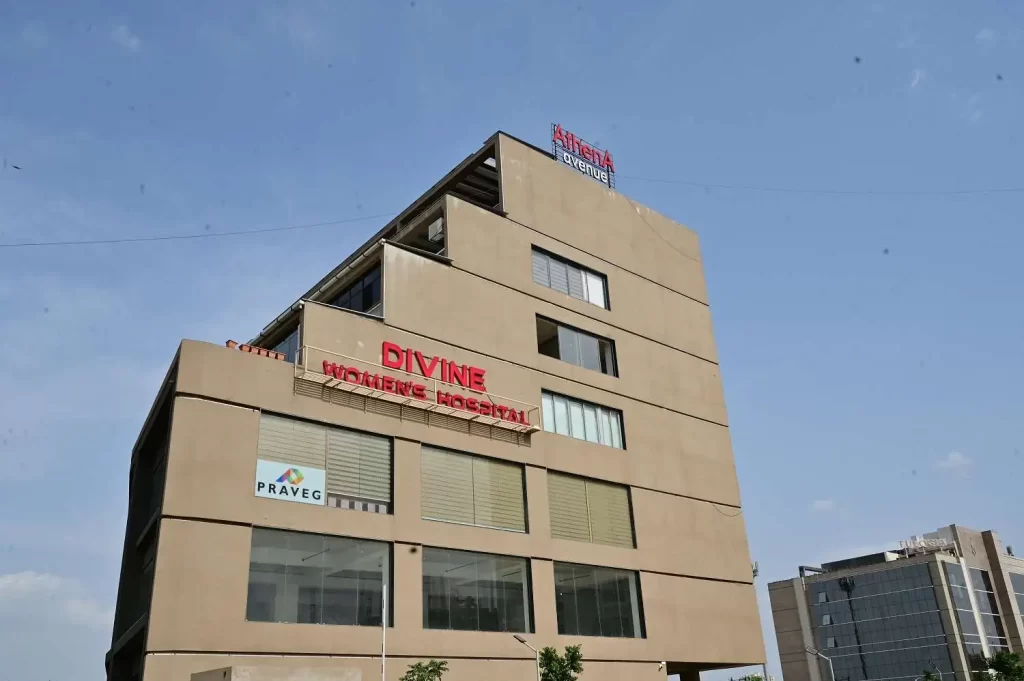
Warm water eases contractions, supports movement and helps many women stay in control during labour. Our birthing pool is medically supervised throughout, with the theatre a few steps away if plans change.

If you’re considering a water birth, you likely have two kinds of questions: what it actually involves, and whether it’s safe. This page covers both, based on how underwater birth is offered at Divine Women’s Hospital Gujarat’s first hospital to offer this facility.
What Is Water Birth?
Water birth means laboring, and in some cases delivering, in a tub of warm water kept at a controlled, body-safe temperature. The idea isn’t new international bodies like RCOG (UK) and ACOG (US) have supported water immersion during labor for healthy, low-risk pregnancies for years, largely because warm water genuinely helps with pain and relaxation without the need for as much medication.
In India, though, it’s still uncommon. Documented water births in the country go back to the early 2000s, and even today only a small number of hospitals mostly in larger cities offer it. That’s part of why Divine Women’s Hospital being Gujarat’s first facility to offer this matters: it’s a real, limited-availability service, not a widely available default option. For a deeper look at safety guidelines and how water birth facilities work across India, see our underwater birth guidelines in India page.
How Does Underwater Birth Work?
Labor progresses largely the same way as a regular delivery contractions, dilation, the same stages except you’re immersed in warm water (typically maintained around 36–37°C) for some or all of the first stage of labor.
Some mothers choose to stay in the water through delivery itself; others use the pool for labor and pain relief, then move to a bed for the actual birth. Your medical team monitors you and your baby continuously throughout, and the decision about whether to deliver in water or
Benefits of Water Birth
The appeal of water birth isn’t just comfort there’s real clinical reasoning behind it:
- Natural pain relief : warm water reduces the perception of labor pain, often reducing the need for epidural or other analgesia
- Increased relaxation and buoyancy : makes it easier to move and find comfortable positions during labor
- Reduced likelihood of certain interventions : studies on low-risk water births report comparable or lower intervention rates than land births
- Reduced risk of perineal tearing : the warm water softens perineal tissue, which can lower tearing risk
- Gentler transition for the baby : moving from amniotic fluid into warm water is a softer environment change than delivery into open air
- Higher reported maternal satisfaction : reflected in several hospital-based studies comparing water births with matched conventional deliveries
Is Water Birth Safe?
This is the question most expectant mothers actually want answered, so it deserves a direct answer: yes, for the right candidates, under proper medical supervision. Reviews of published research on water immersion during labor and delivery have found no meaningful increase in complications for mother or baby when candidates are properly screened and monitored comparable Apgar scores, no increase in NICU admissions, and no increase in infection rates in well-managed settings.
The safety depends entirely on two things: choosing the right candidates, and having the right monitoring and emergency protocols in place both of which are built into how we run our program.
Who Is a Good Candidate for Water Birth?
Water birth isn’t right for every pregnancy, and part of good care is being honest about that upfront. You’re generally a good candidate if:
- You’re carrying a single baby (not twins/multiples)
- Your baby is in the normal head-down position
- You’re at term (37+ weeks)
- You’ve had a low-risk, uncomplicated pregnancy
- You don’t have conditions like preeclampsia, active infection, or placenta previa
Your doctor will confirm your eligibility during your antenatal visits not as a formality, but because these criteria genuinely determine whether water birth is the safer choice for you and your baby. Still weighing it up? Our is underwater birth right for you guide walks through the pros, cons, and personal factors worth considering.
Our Underwater Birth Facility at Divine Women's Hospital
Our birthing pool is set up specifically for safe water labor and delivery not a converted, general-purpose tub:
- Temperature-controlled water, maintained within a safe range throughout labor
- Continuous fetal heart rate and maternal vital sign monitoring while you’re in the pool
- Clear pool access from multiple sides so our medical team can reach you quickly if needed
- A trained team present throughout, with an established protocol for moving you out of the pool immediately if your doctor determines it’s needed
- Strict water hygiene and pool-cleaning protocols between uses
Meet Your Doctor
Your underwater birth is led by Dr. Devang Patel, Obstetrician & Gynecologist at Divine Women’s Hospital, with dedicated experience in underwater delivery techniques and a strong focus on safety-first, personalized birth planning. Antenatal care and eligibility screening are also supported by Dr. Amrita Patel, Director and Obstetrician & Gynecologist at the hospital.
Underwater Birth Cost in Ahmedabad
Cost depends on your specific delivery plan, room preference, and any additional care needed during labor so we don’t quote one flat number. Your doctor will walk you through a clear cost breakdown during your antenatal visits, well before your due date, so there are no surprises at delivery.
Why Choose Divine Women's Hospital for Underwater Birth
- Gujarat's first dedicated underwater birth facility
- A temperature-controlled birthing pool maintained within a safe range throughout
- Eligibility assessed honestly during antenatal visits, not on the day
- Continuous monitoring of your baby with waterproof equipment
- A dedicated operation theatre and NICU support if anything needs to change
- Other pain relief available if you decide the pool is not enough
Underwater Birth Specialist in Ahmedabad

At Divine Women's Hospital, Ahmedabad, water birth is offered where the pregnancy is suitable and declined where it is not - with the reason explained rather than the option quietly withdrawn.
Dr. Devang Patel is a Gold Medalist in M.D. Obstetrics & Gynecology with an FNB in High Risk Pregnancy and Perinatology, and leads the hospital's underwater birth programme.
A dedicated operation theatre and NICU support with a consultant neonatologist are available on site throughout.
Choosing the right candidate is most of what makes water birth safe.
If you are considering a water birth, raise it at your antenatal visit so eligibility can be assessed properly.
Frequently Asked Questions
Underwater delivery is becoming increasingly popular among expectant mothers looking for a more natural and peaceful birth experience. At Divine Women’s Hospital, we provide this innovative way of childbirth, which has various advantages for both the mother and the infant. Here’s how Divine Women’s Hospital’s underwater birth program can help:
1. Motion & Comfort
2. Increased relaxation
3. Reduced chance of medical procedures
4. Reduced risk of tears
5. Improved movement
6. Personalized Environment.
7.Smooth transition.
8. Immediate Bonding
9. Quicker Recovery
10. Minimized postpartum discomfort
11. Comprehensive monitoring.
12. Experienced Team
Why families across Gujarat trust Divine Women's Hospital
Choosing where to be cared for is a personal decision, and it usually comes down to one question: will someone actually listen to me? At Divine Women's Hospital, that is where every consultation begins. Our senior consultants stay with you from the first visit through recovery, so you never have to repeat your story to a new face.
One consultant, start to finish
The doctor who examines you is the doctor who plans your treatment and performs your procedure. Continuity is not a luxury here, it is the baseline.
Explained in plain language
Reports are walked through line by line, in Gujarati, Hindi or English, until the plan makes sense to you and the family member sitting beside you.
Modern theatre and imaging under one roof
Laparoscopy suites, fetal-medicine grade ultrasound, NICU support and 24x7 emergency cover mean fewer referrals and less waiting between steps.
Honest, itemised costs
You receive a written estimate before admission. If the plan changes, we tell you why before anything is done.
Questions women ask us most
Is water birth safe?
For low-risk pregnancies with continuous monitoring, yes. Your consultant confirms your suitability in the third trimester.
Related Articles

16 December 2025
Role of Midwives and Medical Teams in a Safe Underwater Birth
Childbirth practices are evolving as more expectant mothers seek natural, gentle, and empowering birthing experiences. One such option gaining popularity is underwater birth. When performed in a controlled medical environment, underwater birth can offer comfort, reduced pain, and a calm transition for the baby.
Read more
9 September 2025
Underwater Birth: Is It Safe and Right for You?
For expectant mothers seeking a more natural and gentle birthing experience, underwater birth-also known as water birth - has become increasingly popular. Delivering in water can provide comfort, reduce labor pain, and create a calming environment for both mother and baby. But is it the right choice for you?
Read more
6 November 2023
Discovering the Depths: A Detailed Overview to Underwater Birth and Its Benefits
The experience of bringing a new life into the world is momentous and life-changing. Different birthing techniques have become more and more common over time, with underwater birth standing out as a different and incredible choice for a lot of expectant parents.
Read moreWe are here for you
Book a consultation with Ahmedabad's trusted women's health team
Internationally certified obstetricians, gynecologists and fertility specialists, available 24×7 for you and your baby.