
PCOD/PCOS Treatment in Ahmedabad: Symptoms, Diagnosis & Cost
Periods that never arrive when they should. Weight that will not shift however carefully you eat. Acne, unwanted hair, or a scan report that mentions cysts and leaves you none the wiser.
PCOD and PCOS are common, they are manageable, and they respond well to treatment - but only once someone has established which of them you actually have and what is driving it.
At Divine Women's Hospital, Ahmedabad, Dr. Devang Patel, Gynaecologist and Laparoscopic Surgeon, starts with your cycle history, your symptoms and your goals before any treatment is decided.
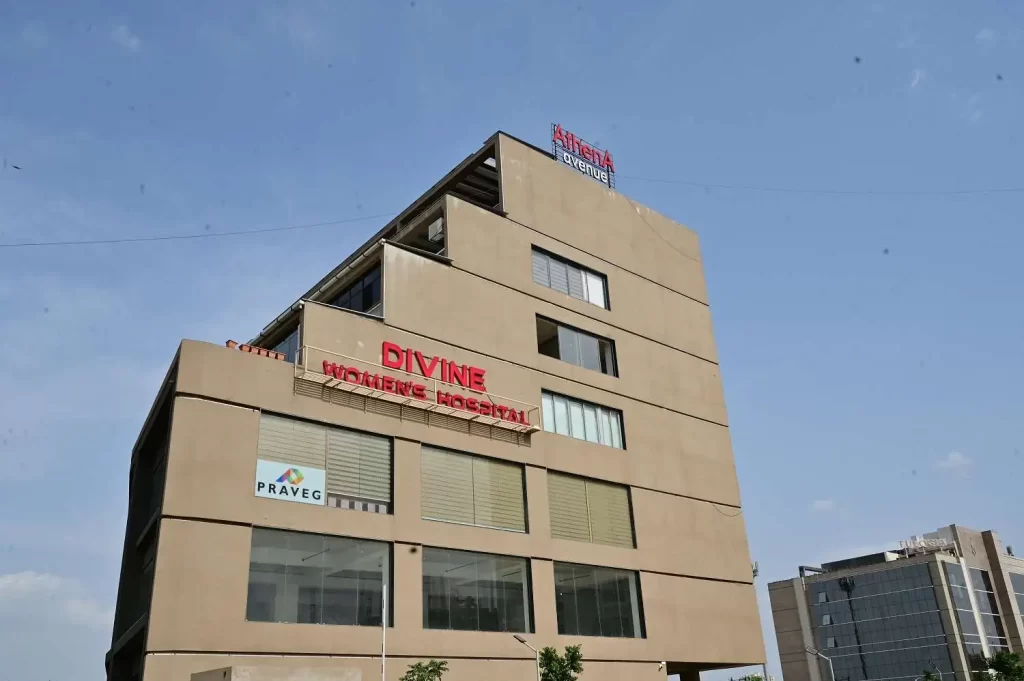

If you’ve been told you have PCOD or PCOS, or you suspect you might, the questions that matter most are usually simple: what does treatment actually cost, how long does it take, and will it affect your ability to have children someday.
This page answers all three, based on how PCOD and PCOS are diagnosed and treated at Divine Women’s Hospital in Ahmedabad.
PCOD (Polycystic Ovarian Disease) and PCOS (Polycystic Ovary Syndrome) together affect roughly 1 in 5 women of reproductive age in India. Both are manageable in almost every case but only with the right diagnosis and a treatment plan built around your specific symptoms, not a one-size-fits-all approach.
What Is PCOD? How Is It Different From PCOS?
build up over time and form small cysts. This disrupts your regular hormone balance, which is why PCOD often shows up as irregular periods, weight changes, and fertility difficulty rather than as a single obvious symptom.
PCOS is the more clinically significant of the two it’s a broader hormonal and metabolic disorder that can involve higher androgen (male hormone) levels and a greater impact on long-term metabolic health, alongside similar symptoms to PCOD.
In practice, the two conditions overlap heavily, are diagnosed with the same tests, and are managed with the same step-by-step treatment approach which is why we treat and discuss them together on this page rather than as two separate conditions. If you want more detail on how PCOD specifically affects fertility, we’ve covered it separately in PCOD and Fertility: Early Diagnosis & Pregnancy.
PCOD/PCOS Treatment Cost in Ahmedabad
Treatment cost for PCOD or PCOS depends on three things: how advanced your symptoms are, what diagnostic tests you need, and whether your treatment plan is purely medical or also includes a fertility component.
Because of this, we don’t quote a single flat fee your gynecologist gives you a clear cost breakdown after your initial consultation and diagnostic tests (typically an ultrasound and hormone panel), so you know what you’re paying for before treatment begins.
For a full breakdown of what’s included at each stage of treatment, see our detailed PCOD Treatment Cost Guide.
Symptoms of PCOD and PCOS You Shouldn't Ignore
Both conditions are easy to dismiss early on because the symptoms build up gradually and overlap heavily. The most common ones we see at the clinic are:
- Irregular or missed periods
- Unexplained weight gain, especially around the abdomen
- Acne or oily skin that doesn’t respond to usual treatment
- Excess hair growth on the face or body
- Thinning hair on the scalp
- Difficulty conceiving
If you’re experiencing two or more of these together, it’s worth getting checked rather than waiting for things to get worse.
What Happens If PCOD or PCOS Goes Untreated
Neither condition is an emergency, but leaving them unmanaged for years does carry real long-term risk - this is especially true for PCOS, given its stronger link to metabolic health.
Prolonged hormone imbalance is linked to a higher chance of insulin resistance and type 2 diabetes, elevated cholesterol, and, because irregular ovulation means irregular shedding of the uterine lining, a higher risk of endometrial changes over time.
This isn’t meant to alarm you the point is the opposite: both conditions respond well to treatment, so there’s little reason to let them go unaddressed for years.
How PCOD and PCOS Are Diagnosed at Divine Women's Hospital
Diagnosis is straightforward and usually completed in a single visit:
- Clinical history and symptom review : your doctor asks about your cycle history, weight changes, and family history.
- Pelvic ultrasound : checks for the characteristic ovarian pattern.
- Hormone blood panel : measures LH, FSH, testosterone, and insulin resistance markers.
symptoms and your goals whether that’s regulating your cycle, managing weight, or preparing for pregnancy.
PCOD/PCOS Treatment Options We Offer
There’s no single “PCOD treatment” or “PCOS treatment” international treatment guidelines approach both as a step-by-step process based on your goals, and that’s the same approach we follow.
Step 1: Lifestyle and Diet-Based Management
his is the recommended starting point for almost every PCOD case, not just a “try this first” formality. Even a modest weight change around 5 to 10% of body weight has been shown to meaningfully improve insulin resistance, hormone balance, and menstrual regularity.
Step 2: Hormonal and Medical Management
If cycle irregularity, acne, or excess hair growth persist despite lifestyle changes, the next step is medical management typically hormonal treatment to regulate your cycle, and, where insulin resistance is a factor, insulin-sensitizing medication.
If hirsutism or acne doesn’t improve enough, targeted anti-androgen medication may be added. Your gynecologist selects and adjusts these based on your hormone panel and how you respond over the following months this isn’t a fixed prescription, it’s monitored and adjusted.
Step 3: Fertility-Focused Treatment
If PCOD is affecting your ability to conceive, treatment shifts specifically toward ovulation induction, generally starting with oral medication before moving to more involved options if needed.
This is a staged approach most women don’t need to jump straight to advanced fertility treatment, and your gynecologist will only escalate the plan if the earlier step isn’t working after a few monitored cycles. This is coordinated with Dr. Dipesh Sorathiya, our infertility and IVF specialist, when needed.
Ongoing Monitoring
Because PCOD is a hormonal condition rather than a one-time problem to fix, we also monitor for the longer-term effects it can have blood sugar, cholesterol, and blood pressure as part of routine follow-up, not just the symptoms you originally came in with.
A Note on Ayurvedic and Homeopathic PCOD Treatment
Many women search for Ayurvedic or homeopathic options for PCOD, and it’s a fair question to ask. Divine Women’s Hospital provides medically-supervised (allopathic) treatment based on diagnostic evidence we don’t offer Ayurvedic or homeopathic treatment ourselves.
If you’re currently using or considering either alongside medical treatment, it’s important to inform your gynecologist, as some herbal supplements can interact with hormonal medicati
Why Choose Divine Women's Hospital for PCOD/PCOS Treatment
- Diagnosis and treatment plan confirmed in a single visit in most cases
- Treatment plans built around your specific hormone panel, not a standard protocol
- Led by Dr. Devang Patel (MBBS, M.D. Obs & Gyn, FNB in High Risk Pregnancy & Perinatology), with extensive experience managing gynecological conditions including PCOD
- Direct coordination with Dr. Dipesh Sorathiya (M.S. Obs & Gyn, Diploma in ART & IVF UK) if PCOD is affecting your ability to conceive
PCOD & PCOS Specialist in Ahmedabad

At Divine Women's Hospital, Ahmedabad, PCOD and PCOS are treated as long-term hormonal conditions rather than a one-off prescription - the plan changes as your goals change.
Dr. Devang Patel holds an M.D. in Obstetrics & Gynecology and is an experienced laparoscopic surgeon. Where fertility is the priority, treatment moves in step with our fertility team rather than being handed over separately.
Divine Women's Hospital provides gynaecological care with a focus on hormonal health and women's reproductive wellbeing.
PCOD is not something you are stuck with. It is something you manage - and it responds.
If your cycles are irregular or you are struggling to conceive, an evaluation is the place to start.
Frequently Asked Questions
They’re closely related but not identical. PCOD is generally the milder, more common condition; PCOS is a broader hormonal and metabolic disorder with a greater long-term health impact. Both are diagnosed with the same tests and managed with the same step-by-step treatment approach, which is why we treat them together here.
What to expect at Divine Women's Hospital
Choosing where to be cared for is a personal decision, and it usually comes down to one question: will someone actually listen to me? At Divine Women's Hospital, that is where every consultation begins. Our senior consultants stay with you from the first visit through recovery, so you never have to repeat your story to a new face.
One consultant, start to finish
The doctor who examines you is the doctor who plans your treatment and performs your procedure. Continuity is not a luxury here, it is the baseline.
Explained in plain language
Reports are walked through line by line, in Gujarati, Hindi or English, until the plan makes sense to you and the family member sitting beside you.
Modern theatre and imaging under one roof
Laparoscopy suites, fetal-medicine grade ultrasound, NICU support and 24x7 emergency cover mean fewer referrals and less waiting between steps.
Honest, itemised costs
You receive a written estimate before admission. If the plan changes, we tell you why before anything is done.
Related Articles
5 October 2026
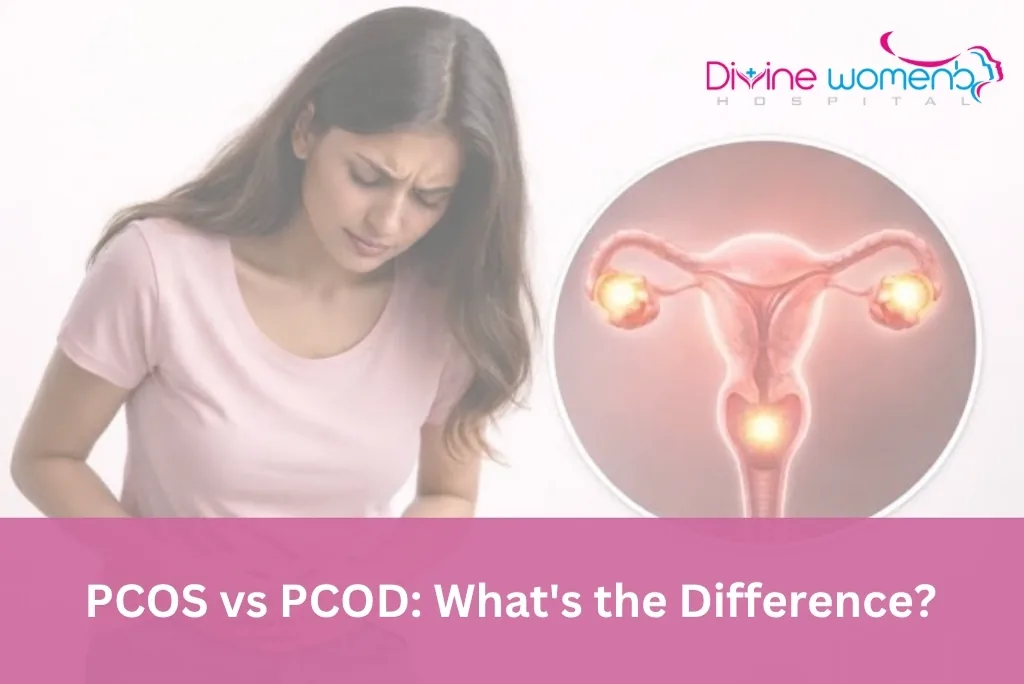
PCOS vs PCOD: What's the Difference?
If you've heard both terms used for the same symptoms and wondered which one you have, the short answer is that they're the same condition. The real diagnostic criteria, symptoms and treatment options for PCOS.
Read more
19 March 2026
AI and Predictive Analytics in PCOD Diagnosis and Treatment Planning
Polycystic Ovary Disease (PCOD) is one of the most common hormonal disorders affecting women today. Early detection and personalized treatment are crucial for managing symptoms like irregular periods, weight gain, infertility, and hormonal imbalance.
Read more
25 December 2025
PCOD and Fertility: How Early Diagnosis Improves Pregnancy Outcomes
Polycystic Ovarian Disease (PCOD) is one of the most common hormonal disorders affecting women of reproductive age today. With changing lifestyles, stress, and dietary habits, the number of women diagnosed with PCOD is rising steadily - especially in urban cities like Ahmedabad. One of the biggest concerns associated with PCOD is its effect on fertility.
Read moreWe are here for you
Book a consultation with our women's health team in Ahmedabad
Obstetricians, gynecologists, fertility specialists and a neonatologist, with hospital staff available 24×7 for you and your baby.