
Factors That Affect IVF Success Rate: What Really Matters
This article is written by our clinical team for the women and families we meet every day. It is meant to inform you, not to replace a consultation, and every recommendation here is one we would give you in the room.
If you’re about to start IVF or you’re in the middle of it you’ve probably searched “IVF success rate” more times than you’d like to admit. It’s a natural thing to want a number you can hold onto.
But here’s the truth: there isn’t one single success rate that applies to everyone. Your chances depend on a specific mix of factors, some you can influence and some you can’t.
This guide breaks down exactly what those factors are, in plain language, so you know what’s actually within your control and what to simply be prepared for.
The Single Biggest Factor: Age
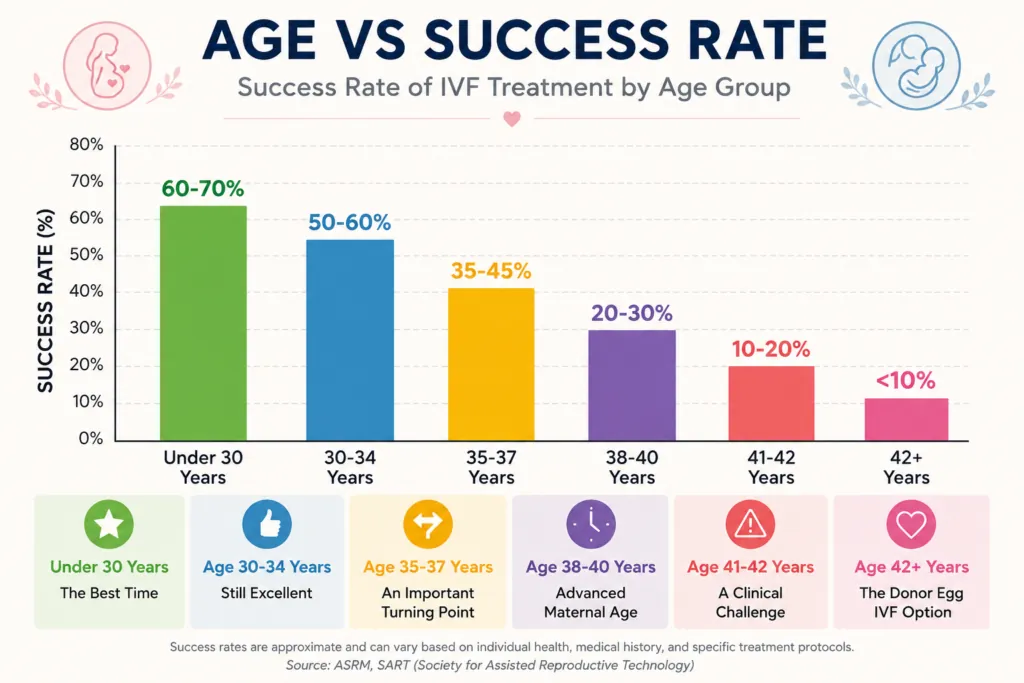
Of everything that affects IVF outcomes, a woman’s age has the strongest impact by far. Live birth rates per IVF cycle are typically 50 to 60% for women under 35, dropping to 30 to 40% between 38 to 40, and falling below 10% after 43.
This happens because both the number and the genetic quality of eggs decline as women get older. It’s not something diet or supplements can reverse.
This is exactly why doctors often recommend not delaying IVF if you’re already in your late 30s. Every year matters more than most people realize.
Ovarian Reserve: What It Tells You (and What It Doesn’t)
Ovarian reserve is measured through tests like AMH, FSH, and antral follicle count (AFC). These numbers give your doctor a sense of how many eggs are likely to be retrieved in a cycle.
A lower reserve generally means fewer eggs, which can mean fewer embryos to choose from. But here’s what many patients don’t realize: once age and embryo count are factored in, ovarian reserve on its own doesn’t strongly predict whether a single transfer will succeed.
In other words, a lower AMH isn’t a reason to lose hope it simply means your doctor may recommend a more tailored stimulation plan.
Lifestyle Factors You Can Actually Control
Unlike age, these factors are ones you have real influence over and they’re worth taking seriously before you start treatment.
Body weight: Research shows that both being underweight and having a higher BMI can lower IVF success rates. Studies suggest severely elevated BMI can reduce live birth chances by up to 25–27% compared to a healthy weight range.
Smoking: This one is significant. Studies show smoking can roughly cut live birth chances in half. If you smoke, quitting before starting IVF is one of the most impactful things you can do.
Alcohol: The evidence here is less clear-cut, but heavy drinking is generally advised against during treatment.
The takeaway isn’t to panic about small lifestyle imperfections it’s that meaningful, sustained changes (a few months before treatment, if possible) can genuinely shift your odds.
Underlying Health Conditions
Not all fertility-related conditions affect IVF the same way. Here’s how the most common ones actually play out:
PCOS: This often surprises patients PCOS on its own is not a negative factor for IVF. Women with PCOS frequently produce more eggs and often have equal or even better cumulative success rates than women without PCOS, as long as related issues like weight and insulin resistance are managed.
Endometriosis: Mild endometriosis has little effect on IVF outcomes. Moderate-to-severe stages can somewhat lower success rates, mainly due to their impact on egg quality and the uterine environment.
Uterine fibroids or polyps: These can matter more than people expect, especially if they distort the uterine cavity. Fibroids affecting the cavity have been shown to lower success rates noticeably, which is why doctors often recommend removing them before starting IVF.
Male factor infertility: Low sperm count or motility used to be a major obstacle, but with ICSI (where a single sperm is directly injected into the egg), outcomes for couples with male factor infertility are now very similar to those without it.
Embryo Quality: The Factor That Matters Most Once You’re In Treatment
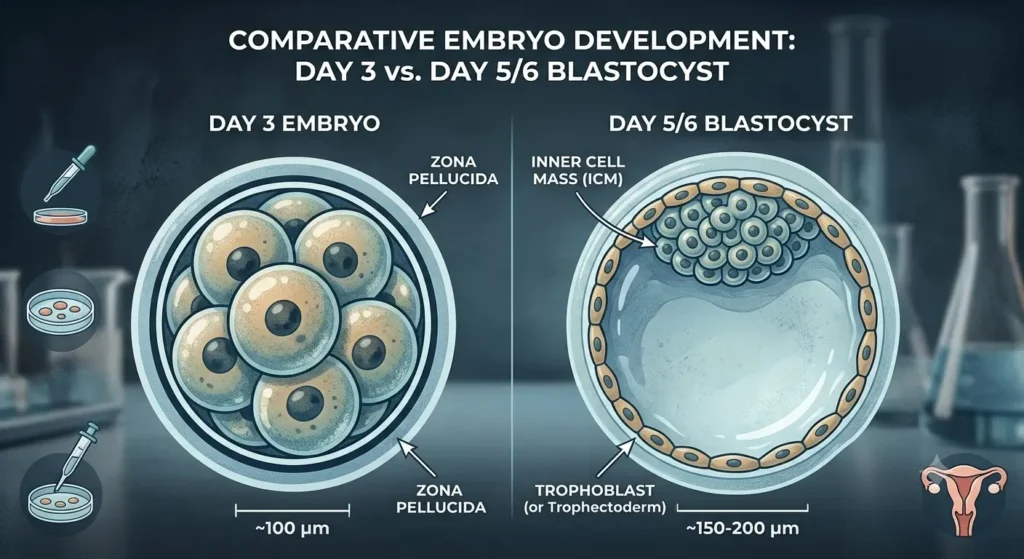
Once stimulation and egg retrieval are done, embryo quality becomes the strongest predictor of success for that specific cycle.
High-grade embryos particularly those that reach the blastocyst stage (day 5–6 of development) have meaningfully higher implantation rates than lower-grade or earlier-stage embryos.
This is one reason many clinics now prefer to culture embryos to blastocyst stage before transfer, when it’s medically appropriate to do so.
Fresh Transfer vs. Frozen Transfer
There’s a common assumption that fresh embryo transfer is always the “faster, better” option. In reality, frozen embryo transfer (FET) can offer a slight success advantage in certain patients, particularly those who respond strongly to stimulation or have PCOS.
This is because a frozen cycle gives the uterine lining time to return to a more natural, receptive state, rather than being affected by high hormone levels from stimulation.
For most patients with a typical response, though, fresh and frozen transfers offer roughly similar success rates. Your doctor’s recommendation will usually come down to your specific hormone levels and response to stimulation.
Lab and Clinic-Level Factors
Not everything comes down to the patient. The quality of the embryology lab plays a real role too.
Modern techniques like vitrification (a fast-freezing method) have dramatically improved embryo and egg survival rates compared to older freezing methods. A well-equipped, experienced lab also tends to show more consistent outcomes over time.
This is part of why choosing a clinic with a track record not just a promised number matters as much as any single medical factor.
What About PGT-A (Genetic Testing of Embryos)?
PGT-A screens embryos for chromosomal abnormalities before transfer. It sounds like it should obviously improve success rates, but current research shows it doesn’t meaningfully increase overall live birth rates for most patients.
It can be useful in specific situations such as recurrent pregnancy loss or advanced maternal age but it isn’t necessary for everyone, and your doctor can help you decide if it’s relevant for your situation.
So, What Can You Actually Do?
Here’s the realistic summary: age and ovarian reserve are largely out of your hands, but weight, smoking, treating fibroids or polyps, and choosing an experienced clinic are all factors you genuinely influence.
The most useful thing you can do is have an honest, detailed conversation with your fertility specialist about which of these factors apply to your specific situation rather than relying on a single generic “success rate” number.
At Divine Women’s Hospital in Ahmedabad, our team reviews each of these factors individually with every patient, so your treatment plan reflects your actual profile, not just averages.
When to Seek Medical Advice
Frequently Asked Questions
It depends heavily on age. For women under 35, 50–60% live birth rate per cycle is considered strong; the number naturally declines with age, which is why comparing your personal odds to national averages isn’t always meaningful.
Conclusion
IVF success isn’t determined by one number it’s shaped by a combination of age, health, embryo quality, and the expertise of your clinical team. Understanding which factors you can influence puts you in a stronger position going into treatment.
If you’d like a clear, personalized read on your own chances, the team at Divine Women’s Hospital, Ahmedabad, is here to walk you through it.
Why families across Gujarat trust Divine Women's Hospital
Choosing where to be cared for is a personal decision, and it usually comes down to one question: will someone actually listen to me? At Divine Women's Hospital, that is where every consultation begins. Our senior consultants stay with you from the first visit through recovery, so you never have to repeat your story to a new face.
One consultant, start to finish
The doctor who examines you is the doctor who plans your treatment and performs your procedure. Continuity is not a luxury here, it is the baseline.
Explained in plain language
Reports are walked through line by line, in Gujarati, Hindi or English, until the plan makes sense to you and the family member sitting beside you.
Modern theatre and imaging under one roof
Laparoscopy suites, fetal-medicine grade ultrasound, NICU support and 24x7 emergency cover mean fewer referrals and less waiting between steps.
Honest, itemised costs
You receive a written estimate before admission. If the plan changes, we tell you why before anything is done.
Related Reads
9 July 2026
IVF Timeline Week by Week: What Really Happens From Day 1 to Your Pregnancy Test
Starting in vitro fertilization (IVF) often means walking into the unknown you know there will be injections, scans, and a wait, but no one tells you exactly what happens on which day. This guide breaks the entire cycle down week by week, using real clinical timelines, so you know what to expect at every stage.
Read more23 June 2026
IVF Success Rate in Ahmedabad Age-Wise Complete Guide (2026)
You’re starting your IVF journey and what’s the very first thing you search on Google? you searching on Google : “What is the IVF success rate in Ahmedabad?” This is a natural and important question.
Read more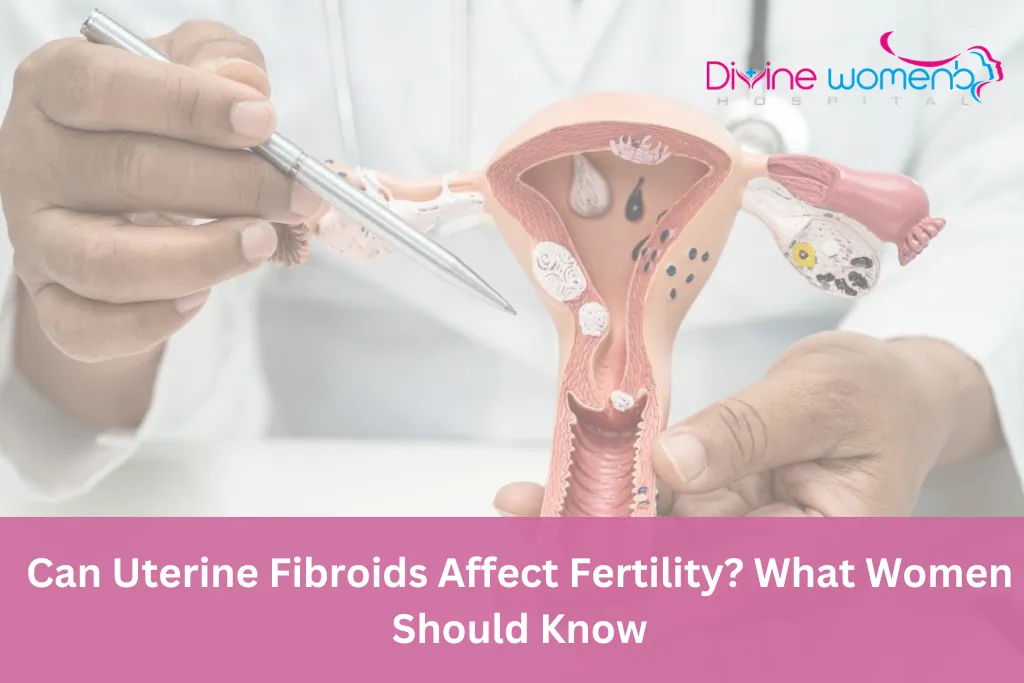
16 June 2026
Can Uterine Fibroids Affect Fertility? What Women Should Know
For many women, discovering they have uterine fibroids can raise concerns about future pregnancy plans. One of the most common questions gynecologists hear is: Can fibroids cause infertility? While not all fibroids affect reproductive health, certain types and locations can interfere with conception and pregnancy.
Read moreWe are here for you
Book a consultation with Ahmedabad's trusted women's health team
Internationally certified obstetricians, gynecologists and fertility specialists, available 24×7 for you and your baby.