
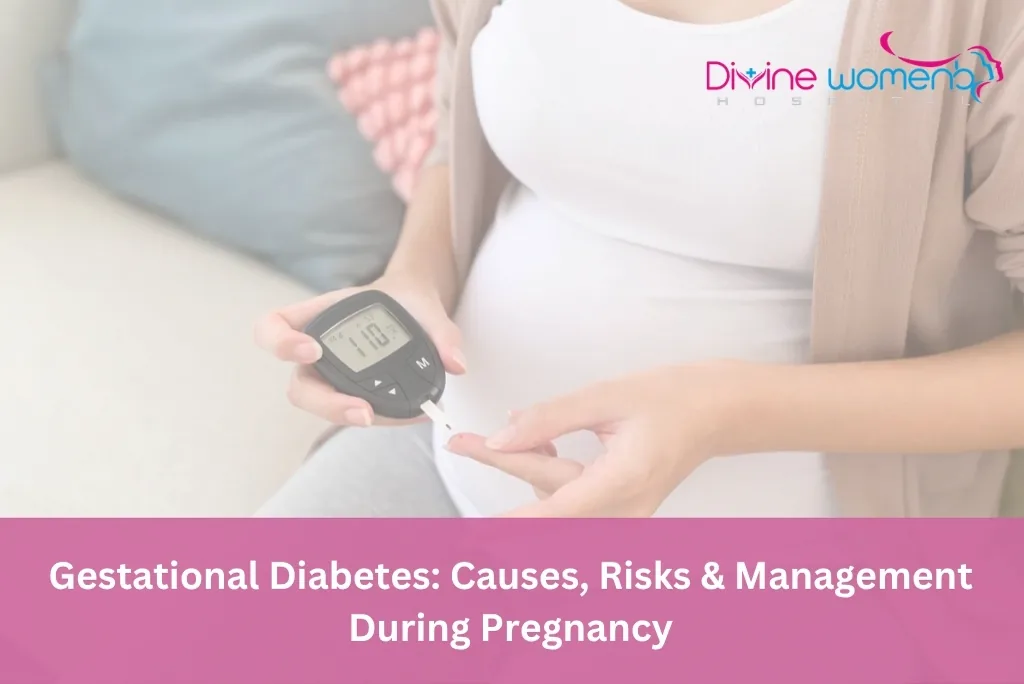
Gestational Diabetes: Causes, Risks & Management During Pregnancy
This article is written by our clinical team for the women and families we meet every day. It is meant to inform you, not to replace a consultation, and every recommendation here is one we would give you in the room.
Gestational diabetes now affects roughly 1 in 7 pregnancies worldwide - but a GDM diagnosis is highly manageable, not a foregone complication. This guide covers what's actually driving the global rise, how diagnostic thresholds differ by guideline, evidence-based glucose targets and medication options, and exactly what postpartum follow-up should look like, since GDM's effects don't end at delivery. GDM is one of the conditions managed within high-risk pregnancy care.
This article is for general educational purposes only and does not replace personalised medical advice. Your glucose targets, medication choice, and delivery timing should be set individually with your obstetric provider or endocrinologist.
In short: gestational diabetes (GDM) is glucose intolerance first identified during pregnancy, screened for at 24-28 weeks via a glucose tolerance test. Standard glycaemic targets are fasting under 95 mg/dL and 1-hour post-meal under 140 mg/dL. First-line treatment is nutrition therapy and exercise; if that's not enough, insulin or metformin are the primary medication options. Mothers face a roughly 9.5-fold future type 2 diabetes risk, making 6-12 week postpartum testing essential.
Key Takeaways
- Global GDM prevalence is estimated at about 14% under IADPSG criteria, ranging from 7-8% in Europe and North America to nearly 28% in the Middle East and North Africa.
- Diagnostic thresholds genuinely differ by guideline (IADPSG, Carpenter-Coustan, NICE, DIPSI) - which one your provider uses affects who gets diagnosed.
- Treating GDM in randomised trials cut severe preeclampsia roughly in half and significantly reduced macrosomia and neonatal hypoglycaemia.
- Mothers with GDM face a ~9.5-fold higher future type 2 diabetes risk and roughly double the cardiovascular risk - making postpartum follow-up genuinely important, not optional.
- Breastfeeding measurably helps: it's linked to a 30-40% reduction in later maternal diabetes risk.
What GDM Actually Is
Gestational Diabetes Mellitus (GDM) is glucose intolerance first recognised during pregnancy, distinct from pre-existing (pregestational) diabetes. It results when pregnancy's normal insulin resistance - driven by placental hormones - exceeds what a mother's pancreas can compensate for.
Pregnancy is inherently a state of progressive insulin resistance: placental hormones (human placental lactogen, placental growth hormone, progesterone, cortisol) and inflammatory signals work against insulin's normal effect, and a healthy pancreas responds by producing more. GDM develops when the pancreas's beta cells can't keep up with that heightened demand - often because of underlying genetic susceptibility or pre-existing insulin resistance. This is a genuine “two-hit” model: a predisposed mother meeting the diabetogenic environment of pregnancy itself.
Rising maternal age and obesity are the two biggest drivers behind climbing GDM rates worldwide. Pre-pregnancy overweight or obesity is the strongest modifiable risk factor - higher BMI directly raises baseline insulin resistance, and the two conditions compound each other: population data shows obesity alone raises preeclampsia risk, and combining obesity with GDM produces the worst outcomes of all. Our pregnancy nutrition guide covers the weight-gain targets by pre-pregnancy BMI.
Diagnostic Criteria: Why Guidelines Disagree
Different regions use meaningfully different diagnostic approaches - this isn't a minor technicality, since it directly affects how many people get diagnosed:
| Criteria | Test | Thresholds (mg/dL) | Abnormal values needed |
|---|---|---|---|
| IADPSG/WHO (international standard) | 75g OGTT | Fasting ≥92, 1-hr ≥180, 2-hr ≥153 | One or more |
| Carpenter-Coustan (US two-step) | 50g screen → 100g OGTT | Fasting ≥95, 1-hr ≥180, 2-hr ≥155, 3-hr ≥140 | Two or more |
| NICE (UK) | 75g OGTT | Fasting ≥100, 2-hr ≥140 | One or more |
| DIPSI (India, low-resource) | 75g OGTT, non-fasting | 2-hr ≥140 | One |
| WHO (1999, legacy) | 75g OGTT | 2-hr ≥140 | One |
Because GDM is largely asymptomatic, major bodies (FIGO, IADPSG, ACOG) now favour universal screening for all pregnant women at 24-28 weeks rather than testing only those with obvious risk factors - targeted risk-based screening alone misses a substantial share of cases, and studies show only about 30-60% of high-risk women even get appropriately tested under that older model. Screening usually happens as part of routine antenatal checkups.
Who's at Risk (and Why It's Rising)
Some groups are screened earlier than the standard 24-28 week window:
- Obesity (BMI ≥30) - screened at the first prenatal visit in addition to the standard window; nutrition counselling is typically adjusted with lower calorie targets.
- Multiple pregnancy - higher GDM risk due to greater placental mass; standard screening applies, with higher caloric needs and more intensive fetal monitoring.
- After fertility treatment (IVF) - often higher GDM risk due to age and underlying subfertility factors; some centres screen earlier given this elevated baseline risk.
- Adolescents - GDM in teenagers often reflects undiagnosed type 2 diabetes or significant insulin resistance, especially alongside obesity or PCOS; the same screening and management principles apply, with extra adherence support.
- Low-resource settings - non-fasting single-step tests (like India's DIPSI) offer a practical alternative where formal fasting OGTT access is limited.
- Other early-screening groups - a prior GDM diagnosis, a strong family history of diabetes, or higher-risk ethnic backgrounds (South Asian, Middle Eastern, African-Caribbean, Native American).
Maternal and Fetal Risks
- Short-term maternal risks: higher rates of hypertensive disorders (including preeclampsia), caesarean delivery, polyhydramnios, and postpartum haemorrhage - often secondary to a larger baby. Randomised trial data (ACHOIS, MFMU Landon 2009) found treating GDM significantly reduced severe preeclampsia rates.
- Long-term maternal risks: a pooled ~9.5-fold higher risk of progressing to type 2 diabetes, roughly double the future cardiovascular risk, and higher rates of metabolic syndrome and fatty liver disease later in life.
- Short-term fetal and neonatal risks: macrosomia (large birth weight) and shoulder dystocia risk from excess fetal nutrient exposure; neonatal hypoglycaemia, hypocalcaemia, polycythaemia, jaundice, and respiratory distress are all more common - even at full term. Treated GDM significantly lowers rates of both macrosomia and neonatal hypoglycaemia compared with untreated GDM in trial data.
- Long-term child risks: meta-analyses report roughly 1.8-2.8x higher odds of childhood overweight or obesity and higher rates of impaired glucose tolerance in adolescence. Notably, long-term follow-up of major treatment trials (ACHOIS, MiG) found no significant difference in childhood BMI or cognitive outcomes between treated and untreated groups at 5-10 years - meaning tighter antenatal glucose control clearly helps short-term outcomes, but its effect on long-term childhood metabolic risk is still not fully settled.
What the Evidence Shows
Randomised controlled trial data (ACHOIS and the MFMU Network's Landon et al. 2009 trial) forms the strongest evidence base in GDM management - treatment significantly reduced severe preeclampsia, macrosomia, and neonatal hypoglycaemia compared with no treatment.
On glucose targets specifically, consensus data shows fasting and 1-hour postprandial goals (95 mg/dL and 140 mg/dL respectively) are achieved by more than 90% of women managed with diet alone - reassuring context for anyone worried that a GDM diagnosis automatically means insulin.
On oral medication, metformin fails to reach glycaemic targets alone in roughly 20-40% of women, who then need supplemental insulin - useful to know going in, since needing to add insulin later isn't a sign that metformin “didn't work”, just that combination therapy was needed.
Management: Nutrition, Monitoring, and Medication
Nutrition therapy (first-line for everyone): individualised carbohydrate distribution across 3 moderate meals plus 2-3 snacks, emphasising low-glycaemic-index carbs, high fibre, and lean protein while limiting refined sugar. Calorie targets are typically around 1,600-1,800 kcal/day for women with obesity and 2,000-2,200 kcal/day for normal-weight women, alongside roughly 30 minutes of gentle aerobic activity (walking, swimming) most days, which independently improves insulin sensitivity.
Glucose monitoring targets:
| Timing | ADA/ACOG target | NICE target |
|---|---|---|
| Fasting | ≤95 mg/dL (5.3 mmol/L) | ≤95 mg/dL (5.3 mmol/L) |
| 1-hour post-meal | ≤140 mg/dL (7.8 mmol/L) | ≤140 mg/dL (7.8 mmol/L) |
| 2-hour post-meal | ≤120 mg/dL (6.7 mmol/L) | ≤115 mg/dL (6.4 mmol/L) |
If diet and exercise alone don't hit these targets within 1-2 weeks, medication is added.
| Therapy | Route | Crosses placenta | Advantages | Disadvantages |
|---|---|---|---|---|
| Insulin (lispro, aspart, NPH, glargine) | Injection | No | Most potent, fully adjustable, zero direct fetal exposure | Daily injections, maternal hypoglycaemia and weight-gain risk |
| Metformin | Oral | Yes (~30-100%) | Convenient, inexpensive, often weight-neutral | GI side effects; 20-40% still need added insulin; long-term child effects still being studied |
| Glyburide | Oral | Yes (~50-100%) | Oral, widely available | Higher neonatal hypoglycaemia and macrosomia rates in trials; increasingly discouraged as a first choice |
NICE and ACOG generally support metformin as a reasonable first pharmacologic step after diet, while insulin remains the traditional gold standard, particularly when glucose runs significantly above target. Glyburide is now considered third-line given the fetal risk data.
Delivery Planning
Diet-controlled GDM can often continue to 40-41 weeks with induction only for standard obstetric reasons. Medication-treated GDM is typically induced by 39-40 weeks to limit macrosomia risk. ACOG suggests offering a caesarean when estimated fetal weight reaches about 4,500 g in GDM pregnancies (versus 5,000 g in non-diabetic pregnancies) specifically to reduce shoulder dystocia risk. Where glucose is well controlled and the baby is an appropriate size, a normal delivery remains entirely possible.
Postpartum Follow-Up
GDM's story doesn't end at delivery - this is where long-term prevention actually happens:
- 6-12 week postpartum OGTT: up to 30% of women test in the diabetes range immediately after a GDM pregnancy - this test catches persistent dysglycaemia while it's still early and manageable.
- Ongoing screening: if that test is normal, re-screening every 1-3 years (ADA) or annually (NICE) is recommended indefinitely, since a GDM history carries lasting risk.
- Breastfeeding: linked to a 30-40% reduction in later maternal diabetes risk - a meaningful, modifiable factor worth prioritising alongside standard postpartum recovery.
- Contraception: progestin-only methods and IUDs are considered safe; combined estrogen-progestin pills remain an option without other contraindications, with attention to glucose monitoring since estrogen can modestly raise insulin resistance.
- Structured prevention programmes: Diabetes Prevention Program-style lifestyle interventions (or metformin) can cut the transition to full type 2 diabetes by roughly half in women with a GDM history.
Frequently Asked Questions
Consensus data across ADA, ACOG, and NICE converges on a fasting target around 95 mg/dL and a 1-hour post-meal target around 140 mg/dL - over 90% of diet-managed women reach these targets, which is reassuring since many people assume a GDM diagnosis automatically means insulin.
Conclusion
Gestational diabetes is common, largely asymptomatic, and highly responsive to management - the combination of universal screening, individualised glucose targets, appropriately chosen medication when needed, and planned delivery timing meaningfully reduces both short-term complications and long-term risk.
The work doesn't stop at birth, either: postpartum glucose testing and continued lifestyle support are what actually lower a mother's long-term diabetes risk, not just the nine months of pregnancy itself.
Next step: if you're diagnosed with GDM, ask your provider which diagnostic criteria and glucose targets your care team uses, and get a referral to a dietitian early - most people manage GDM successfully with nutrition and monitoring alone, and knowing your specific targets from day one makes that much more achievable.
When to Seek Urgent Care
Seek prompt medical attention for symptoms of very high blood sugar (extreme thirst, frequent urination, confusion) or very low blood sugar (shakiness, sweating, confusion, fainting) if you're on glucose-lowering medication - both need timely evaluation rather than waiting for your next appointment.
References
- IADPSG Consensus Panel (2010) - Recommendations on Diagnosis and Classification of Hyperglycemia in Pregnancy.
- ADA Standards of Care in Diabetes (2025) - Management of Diabetes in Pregnancy.
- NICE Guideline NG3 (2025) - Diabetes in Pregnancy.
- HAPO Study Cooperative Research Group - Hyperglycemia and Adverse Pregnancy Outcomes.
- Landon et al. (MFMU Network, 2009) and the ACHOIS Trial - Treatment of Mild Gestational Diabetes.
This overview reflects current ADA, ACOG, NICE, and FIGO consensus guidance on GDM screening, diagnosis, and management. Individual glucose targets, medication choice, and delivery timing should be set with your care team based on your specific glucose pattern and pregnancy.
Gestational diabetes is managed as part of high-risk pregnancy care at Divine Women's Hospital, Ahmedabad, led by Dr. Devang Patel, FNB (High Risk Pregnancy & Perinatology). If your glucose test has come back abnormal, we can set your targets and build a plan with you.
Why families across Gujarat trust Divine Women's Hospital
Choosing where to be cared for is a personal decision, and it usually comes down to one question: will someone actually listen to me? At Divine Women's Hospital, that is where every consultation begins. Our senior consultants stay with you from the first visit through recovery, so you never have to repeat your story to a new face.
One consultant, start to finish
The doctor who examines you is the doctor who plans your treatment and performs your procedure. Continuity is not a luxury here, it is the baseline.
Explained in plain language
Reports are walked through line by line, in Gujarati, Hindi or English, until the plan makes sense to you and the family member sitting beside you.
Modern theatre and imaging under one roof
Laparoscopy suites, fetal-medicine grade ultrasound, NICU support and 24x7 emergency cover mean fewer referrals and less waiting between steps.
Honest, itemised costs
You receive a written estimate before admission. If the plan changes, we tell you why before anything is done.
Related Reads
17 October 2026
Managing Pre-Existing Conditions (Diabetes, Thyroid, BP) Before Pregnancy
Diabetes, thyroid disease and chronic hypertension all need specific targets hit before conception, not after a positive test. The glucose, TSH and blood pressure numbers to aim for, plus which medications have to be switched or washed out first.
Read more
12 May 2026
When Should You Visit a Fetal Medicine Specialist During Pregnancy?
Pregnancy is an exciting journey, but every pregnancy is different. While many pregnancies progress normally, some require closer monitoring and specialized medical attention. This is where a fetal medicine specialist during pregnancy plays an important role.
Read more
17 October 2026
Genetic Screening & Pre-Pregnancy Tests: What to Know
Carrier screening tells you something prenatal testing can't: your risk of passing on an inherited condition while every reproductive option is still open. What the panels check, how the guidelines differ, and why timing it before conception changes what you can do with the result.
Read moreWe are here for you
Book a consultation with Ahmedabad's trusted women's health team
Internationally certified obstetricians, gynecologists and fertility specialists, available 24×7 for you and your baby.