
Best Fertility Treatments for PCOS: Complete Guide
This article is written by our clinical team for the women and families we meet every day. It is meant to inform you, not to replace a consultation, and every recommendation here is one we would give you in the room.
If you have PCOS and you’re trying to conceive, you’ve probably felt like the information out there is either too simple (“just lose weight!”) or too overwhelming (a dozen treatment names you’ve never heard of).
The reality sits in between. PCOS is the most common cause of ovulation-related infertility, but it’s also one of the most treatable. Most women with PCOS do go on to have healthy pregnancies.
This guide walks you through every major fertility treatment option for PCOS from the simplest lifestyle steps to IVF so you understand what each one does, and where it fits in the bigger picture.
Why PCOS Affects Fertility
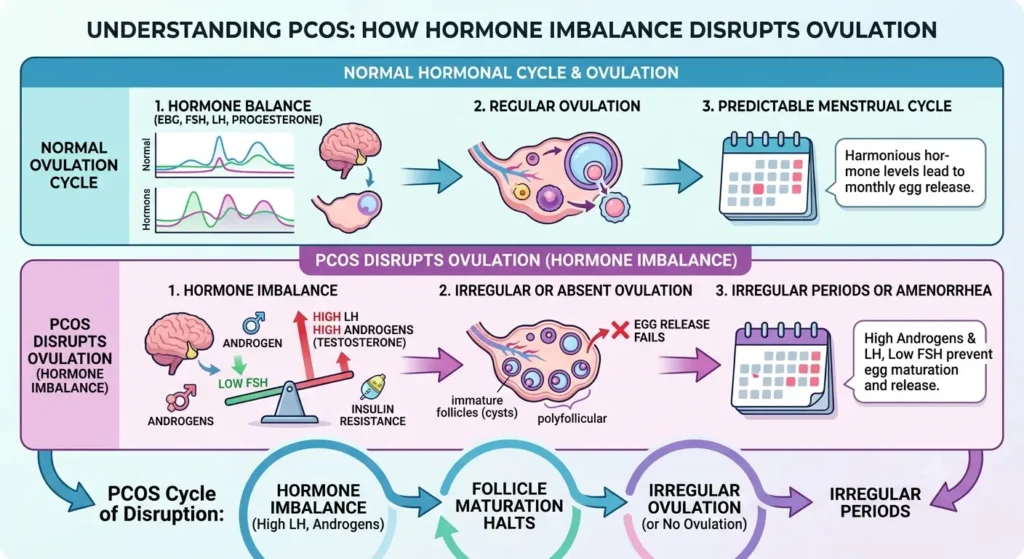
PCOS disrupts ovulation. Hormonal imbalances particularly higher androgen levels and insulin resistance interfere with how your ovaries release eggs each month.
For many women, this means irregular or absent periods, and inconsistent or missing ovulation. Without regular ovulation, natural conception becomes harder.
The encouraging part: because the root issue is usually ovulation, not egg quality, PCOS treatment success rates are generally good often better than many other causes of infertility.
Where Treatment Usually Starts: Lifestyle Changes
For most women with PCOS, especially those with a higher BMI, doctors recommend starting with weight and lifestyle management before or alongside medication, as part of a broader PCOD/PCOS treatment plan tailored to your hormone profile.
Even a modest weight reduction can help restore more regular ovulation for many women, because it improves insulin sensitivity and lowers androgen levels.
This isn’t about extreme dieting. A sustainable, balanced approach regular movement plus a manageable, consistent eating pattern tends to work better than short-term extreme measures, and it’s safer heading into pregnancy. Our guide on natural lifestyle tips to manage PCOS covers this in more detail.
That said, lifestyle change alone doesn’t work for everyone, and it shouldn’t delay treatment indefinitely if you’re not seeing results after a few months. That’s when medical options come in.
Step 1: Ovulation Induction Medication
This is usually the first medical step for PCOS-related infertility, and it means taking medication to help your ovaries release an egg more reliably.
Letrozole
Letrozole is now considered the first-choice medication for most women with PCOS trying to ovulate. It works by temporarily lowering estrogen, which prompts your body to release more of the hormone that triggers egg development.
Research comparing it to older options shows letrozole tends to lead to higher pregnancy and live-birth rates, with generally mild side effects like temporary hot flashes or slight fatigue.
Clomiphene (Clomid)
Clomiphene is an older, well-known ovulation medication. It’s often used if letrozole isn’t suitable or hasn’t worked, sometimes alongside metformin.
It tends to have a somewhat lower success rate than letrozole, partly because it can thin the uterine lining slightly. It remains a reasonable, affordable option many women respond well to.
Metformin
Metformin isn’t primarily a fertility drug it’s used to improve insulin sensitivity. But because insulin resistance plays a role in PCOS, doctors sometimes add it alongside clomiphene, especially for women who are overweight or insulin-resistant.
On its own, its effect on fertility is modest. It’s best thought of as a supporting medication rather than a standalone treatment.
Your doctor will determine the right medication, combination, and dosage for your specific hormone profile this isn’t something to self-manage, since the details matter a lot for both effectiveness and safety.
Step 2: Injectable Gonadotropins
If oral medications don’t lead to ovulation or pregnancy after several cycles, the next step is often injectable hormone medications (gonadotropins), which stimulate the ovaries more directly.
These tend to be more effective at triggering ovulation than oral medications, but they also require closer monitoring regular ultrasounds and blood tests because they carry a higher chance of over-stimulating the ovaries or resulting in a multiple pregnancy (twins).
This is a bigger step up in terms of cost, time commitment, and monitoring, which is why it’s usually reserved for after oral options have been tried.
Laparoscopic Ovarian Drilling: A Surgical Alternative
For women who don’t respond to oral medications and prefer to avoid repeated injection cycles, laparoscopic ovarian drilling is a minor surgical option.
It involves making tiny punctures in the ovary using a laparoscope, which can help reset ovarian hormone production and restore more regular ovulation in many patients.
It’s a one-time procedure rather than an ongoing treatment, though research suggests its overall success rates are somewhat lower than medication-based approaches. It’s typically discussed as an alternative when medications haven’t worked and a patient prefers a surgical option.
Intrauterine Insemination (IUI)
IUI involves placing specially prepared sperm directly into the uterus around the time of ovulation, which is often combined with ovulation induction medication.
It’s a good middle-ground option for couples who’ve had some success with ovulation but haven’t conceived through timed intercourse alone, especially when there’s a mild sperm-related factor involved.
Success rates per cycle are moderate, and it’s usually tried for a few cycles before considering a step up to IVF if it isn’t working. If you’re weighing the two, our detailed IUI vs. IVF comparison breaks down the decision further.
IVF/ICSI: When More Support Is Needed
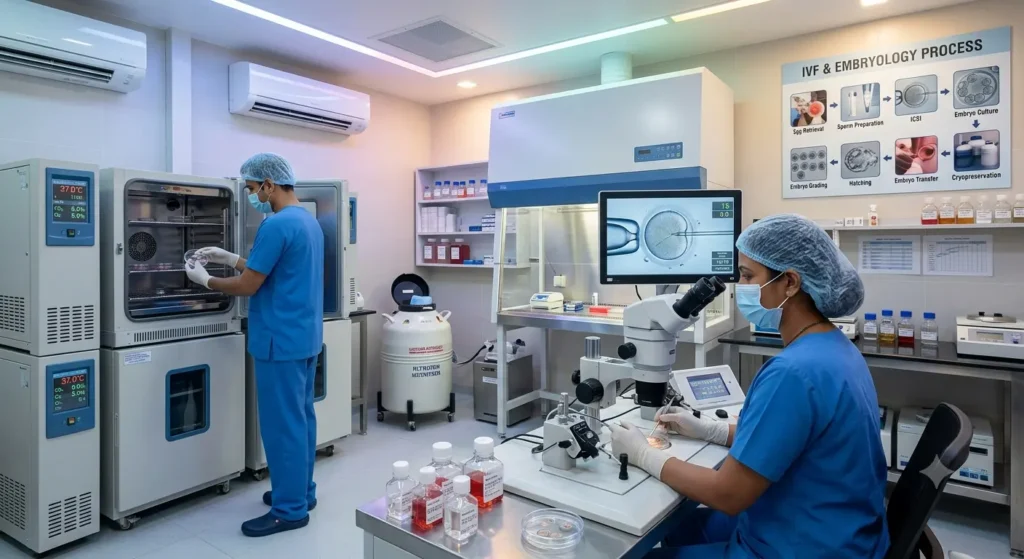
In vitro fertilization (IVF) sometimes combined with ICSI, where a single sperm is injected directly into an egg is generally considered when simpler treatments haven’t led to pregnancy, or when there’s an additional factor like blocked tubes or significant male-factor infertility.
Here’s something that often surprises PCOS patients: women with PCOS frequently respond very well to IVF stimulation, often producing a good number of eggs, and cumulative success rates across IVF cycles are often comparable to or even better than women without PCOS.
The main thing doctors watch closely with PCOS and IVF is ovarian hyperstimulation syndrome (OHSS), since PCOS ovaries can respond strongly to stimulation medication. Most fertility clinics today use protocols specifically designed to lower this risk, including freezing embryos and transferring them in a later, more controlled cycle.
Bariatric Surgery: A Consideration for Severe Obesity
For women with PCOS and significant obesity who haven’t had success with other weight-loss approaches, bariatric surgery is sometimes discussed as an option.
Many women see ovulation return within months of significant weight loss after surgery. Doctors typically recommend waiting about a year after surgery before trying to conceive, to allow the body to stabilize nutritionally.
This is a major, life-changing decision that goes well beyond fertility, and it’s typically explored only when other approaches haven’t been effective and obesity itself is a significant health concern.
What About Supplements Like Inositol?
Myo-inositol and similar supplements are widely marketed for PCOS, and you’ve probably come across them. Current research, though, doesn’t show a clear benefit for actually improving pregnancy or live-birth rates.
They appear to be safe for most people, so there’s generally no harm in taking them if you find them helpful for symptom management just don’t expect them to replace medical treatment, and it’s worth checking with your doctor first.
The same goes for acupuncture: it may help some women manage stress during treatment, but there’s no strong evidence it improves fertility outcomes on its own.
Why PCOS Pregnancies Need Extra Care
Once pregnancy is achieved, PCOS pregnancies are generally considered higher-risk, with a somewhat higher chance of gestational diabetes and blood pressure–related complications.
This isn’t meant to alarm you it simply means your doctor will likely recommend earlier and more frequent screening for these conditions than in a standard pregnancy, so anything that comes up can be managed early.
Finding the Right Treatment Path for You
There isn’t a single “best” treatment for every woman with PCOS the right path depends on your age, weight, how long you’ve been trying, your partner’s fertility factors, and how your body responds to each step.
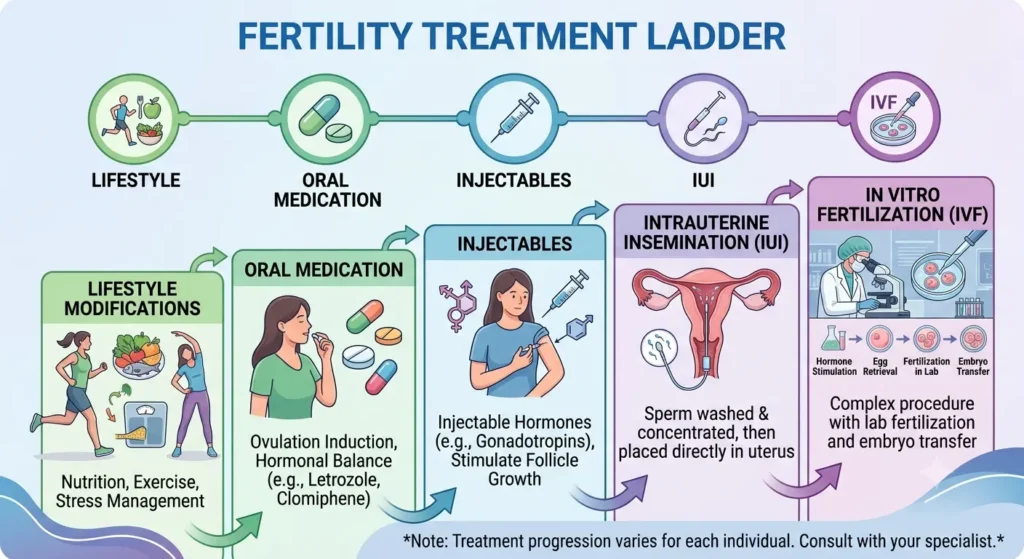
Most fertility specialists follow a step-by-step approach: lifestyle first, then oral medication, then injectables or IUI, and IVF if needed. Many women achieve pregnancy well before reaching the later steps.
The most useful thing you can do is have a detailed, personalized conversation with a fertility specialist who can map out the right sequence for your specific situation, rather than guessing based on general information alone.
At Divine Women’s Hospital in Ahmedabad, our fertility team walks every PCOS patient through this process individually, from the first consultation through whichever treatment path fits best.
Frequently Asked Questions
Why families across Gujarat trust Divine Women's Hospital
Choosing where to be cared for is a personal decision, and it usually comes down to one question: will someone actually listen to me? At Divine Women's Hospital, that is where every consultation begins. Our senior consultants stay with you from the first visit through recovery, so you never have to repeat your story to a new face.
One consultant, start to finish
The doctor who examines you is the doctor who plans your treatment and performs your procedure. Continuity is not a luxury here, it is the baseline.
Explained in plain language
Reports are walked through line by line, in Gujarati, Hindi or English, until the plan makes sense to you and the family member sitting beside you.
Modern theatre and imaging under one roof
Laparoscopy suites, fetal-medicine grade ultrasound, NICU support and 24x7 emergency cover mean fewer referrals and less waiting between steps.
Honest, itemised costs
You receive a written estimate before admission. If the plan changes, we tell you why before anything is done.
Related Reads
6 August 2026
NT-NB Scan in Pregnancy: Complete Guide
If your doctor has just told you it’s time for your NT-NB scan, you probably have two feelings at once excitement about seeing your baby again, and a little anxiety about what the results might mean. That’s completely normal.
Read more
20 July 2026
Vaginal Discharge Types, Colors & Causes: Complete Guide for Women
If you’ve ever paused mid-day, worried about a change in your discharge, you’re not alone. Almost every woman notices some kind of vaginal discharge at some point – and almost every woman has, at least once, wondered if it’s normal.
Read more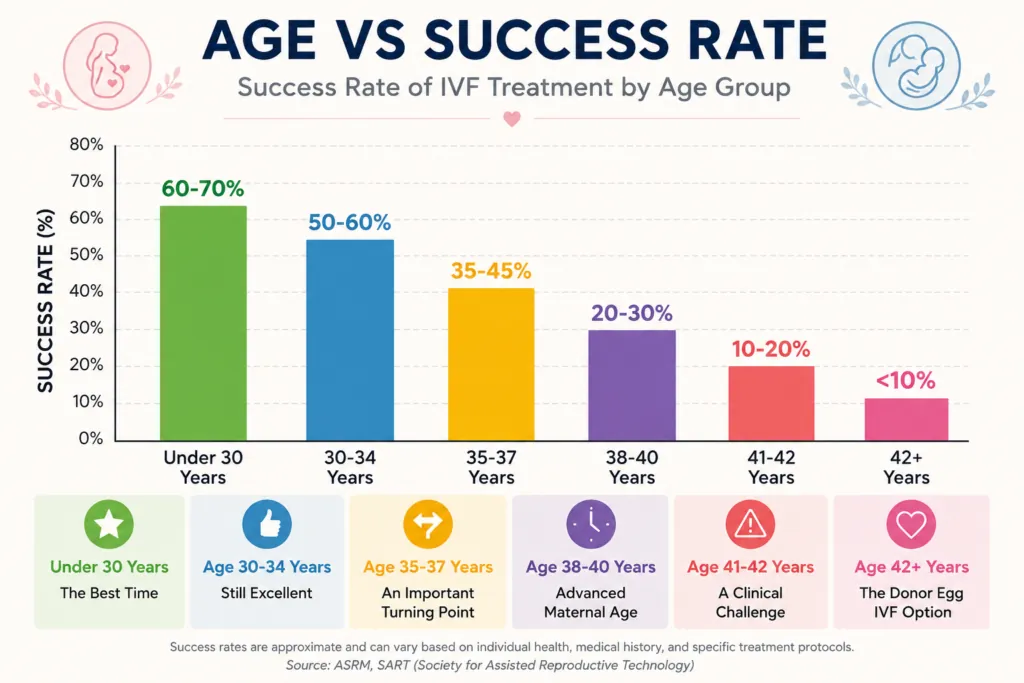
23 June 2026
IVF Success Rate in Ahmedabad Age-Wise Complete Guide (2026)
You’re starting your IVF journey and what’s the very first thing you search on Google? you searching on Google : “What is the IVF success rate in Ahmedabad?” This is a natural and important question.
Read moreWe are here for you
Book a consultation with Ahmedabad's trusted women's health team
Internationally certified obstetricians, gynecologists and fertility specialists, available 24×7 for you and your baby.