
Understanding Ovulation & Fertility Tracking for Conception
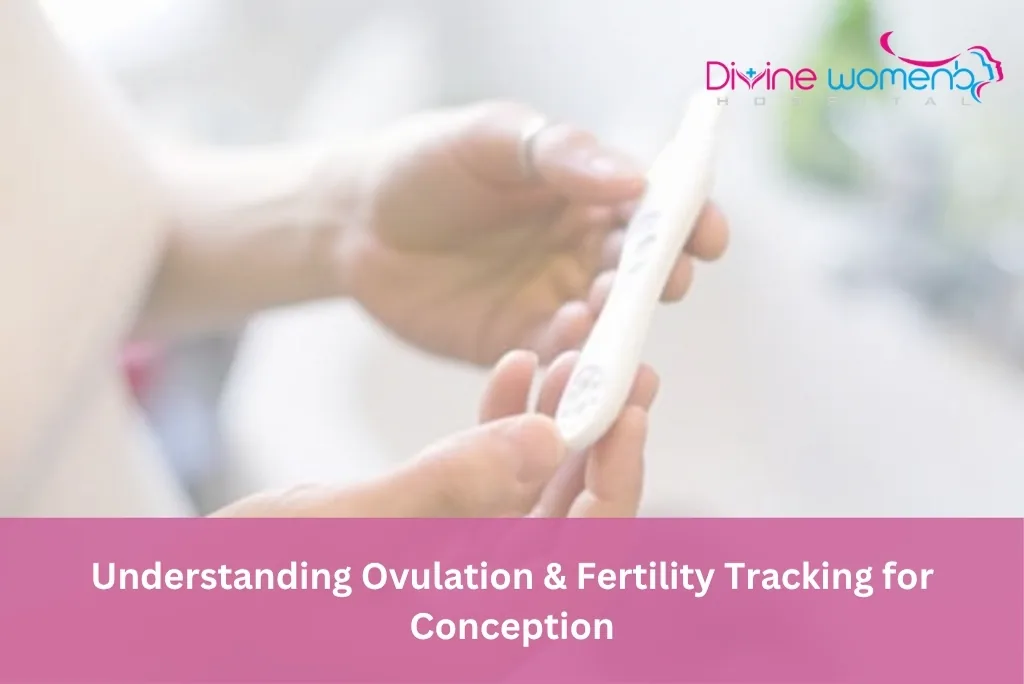
This article is written by our clinical team for the women and families we meet every day. It is meant to inform you, not to replace a consultation, and every recommendation here is one we would give you in the room.
Timing matters more than almost anything else when you're trying to conceive naturally. Your fertile window is real, biologically narrow, and detectable. This guide breaks down exactly how long it lasts, which tracking method actually predicts it (versus just confirming it after the fact), and when timed intercourse alone isn't enough to warrant waiting any longer.
This article is for general educational purposes only and does not replace personalised medical advice. If you've been tracking your cycle accurately and still haven't conceived within the timelines below, talk to your provider about a fertility evaluation.
In short: the fertile window is about 6 days - the 5 days before ovulation plus ovulation day itself - because sperm survive up to 5 days while the egg survives only 12-24 hours. Conception odds peak on the 2 days right before ovulation (27-33% per cycle). Cervical mucus changes and LH ovulation predictor kits predict ovulation in advance; basal body temperature only confirms it after the fact.
Key Takeaways
- The fertile window spans 6 days total, with conception probability climbing sharply in the 48 hours before ovulation.
- ASRM recommends intercourse every 1-2 days during the fertile window - daily isn't necessary and doesn't outperform every-other-day timing.
- LH ovulation predictor kits give a 24-36 hour warning; quantitative hormone monitors that track estrogen (E3G) can flag the fertile window up to 5 days out.
- Basal body temperature only confirms ovulation retroactively - it can't tell you when to time intercourse.
- Fertility evaluation timelines shorten with age: 12 months under 35, 6 months from 35-39, and immediate evaluation at 40 and older.
What the Fertile Window Actually Is
The fertile window is the roughly 6-day span in each menstrual cycle - the 5 days before ovulation plus the day of ovulation - during which intercourse can realistically result in conception, driven by the combined lifespan of sperm (up to 5 days) and the egg (12-24 hours).
After the egg is released, it survives just 12 to 24 hours in the fallopian tube before it can no longer be fertilised. Sperm, by contrast, can survive up to 5 days inside fertile cervical fluid. Combine those two lifespans and you get a fertile window of at most 6 consecutive days - sex any earlier or later than that window essentially can't lead to conception that cycle.
Within that window, daily conception odds aren't flat. They climb sharply as ovulation approaches, because sperm need time to capacitate (become fully able to fertilise) inside the fallopian tubes. Having sperm already waiting in a tubal reservoir before the egg is released is more effective than sex right after ovulation, when the egg is already ageing.
Day-by-Day Conception Probability
| Day relative to ovulation | Conception probability | What's happening |
|---|---|---|
| 5 days before | ~10% | Fertile window opens; cervical fluid begins hydrating |
| 4 days before | ~16% | Late follicular maturation; moderate sperm survival odds |
| 3 days before | ~14% | Rising estrogen; cervical mucus becomes more sperm-friendly |
| 2 days before | ~27-31% | Peak fecundability; ideal for establishing a sperm reservoir |
| 1 day before | ~31% | LH surge peak; maximum odds of viable sperm meeting a fresh egg |
| Day of ovulation | ~33% | High but rapidly closing window as the egg starts ageing |
| 1 day after ovulation | Near 0% | Window closed; cervical mucus thickens again |
Given this curve, ASRM recommends intercourse every 1-2 days throughout the fertile window rather than daily. Shorter ejaculatory intervals preserve sperm quality without meaningfully lowering sperm counts, and couples who find rigid daily timing stressful can simply aim for sex 2-3 times a week across the whole cycle to naturally cover the window.
Cervical Mucus: Your Earliest Signal
Rising estrogen before ovulation transforms cervical mucus from a thick, acidic barrier into a thin, stretchy, alkaline fluid often described as resembling raw egg whites. This fertile-quality mucus filters out abnormal sperm, buffers vaginal acidity, and is what actually sustains sperm for up to 5 days.
The last day you notice this clear, slippery, stretchy fluid - the “Peak Day” - correlates closely with ovulation itself, and tracking it is one of the most reliable real-time predictors of the fertile window opening.
LH Tests vs Quantitative Hormone Monitors
| Method | Predictive or retrospective | What it measures | Key limitation |
|---|---|---|---|
| Cervical mucus observation | Predictive | Estrogen-driven mucus changes | Subjective; affected by infections, semen, antihistamines |
| Urinary LH test (OPK) | Predictive | LH surge (24-36 hr before ovulation) | False positives common in PCOS; urine dilution causes false negatives |
| Basal body temperature | Retrospective only | Post-ovulation progesterone rise | Confirms ovulation but can't predict timing |
| Quantitative multi-hormone monitors | Both | Estrogen (E3G), LH, PdG, sometimes FSH | Higher upfront cost; needs consistent daily testing |
LH test timing tip: urinary LH lags behind blood levels by several hours, so testing urine collected between 10:00 and 20:00 is more sensitive than first-morning urine - and avoid drinking excess fluids beforehand, which can dilute the sample enough to cause a false negative.
Basal Body Temperature: Confirmation, Not Prediction
After ovulation, progesterone from the newly formed corpus luteum raises resting body temperature by about 0.2-0.5°C (0.3-0.9°F). Because that shift depends on sustained progesterone release, basal body temperature can only confirm that ovulation already happened - never predict it in advance.
To confirm ovulation with BBT, use the standard “3-over-6” rule: three consecutive morning temperatures (taken immediately on waking) must be higher than the prior six baseline readings, with the third elevated reading at least 0.2°C above that six-day baseline. This rules out noise from poor sleep, alcohol, or minor illness.
What the Evidence Shows
Cohort data confirms the fertile window spans a maximum of six consecutive days, with conception probability rising from roughly 10% five days before ovulation to 27-33% in the two days immediately preceding it.
Quantitative hormone monitoring studies show that a sustained rise in urinary pregnanediol-3-glucuronide (PdG) across three consecutive days after the LH surge confirms true ovulation with up to 100% specificity - a meaningful advance over basal body temperature alone, and one that can also flag luteinised unruptured follicle syndrome, where an LH surge occurs without actual egg release.
When to Seek a Fertility Evaluation
Clinical guidelines define infertility as no pregnancy after 12 months of regular, unprotected intercourse - but that timeline shortens with age and with verified fertility-timed intercourse:
| Age group | Evaluate after |
|---|---|
| Under 35 | 12 months of regular intercourse, or 6 cycles of verified fertility-timed intercourse |
| 35-39 | 6 months of intercourse, or 6 cycles of fertility-timed intercourse |
| 40 and older | Immediately upon deciding to try - no observation period |
Monthly conception odds peak at 20-25% in your late teens through late twenties, decline gradually through your early thirties, then drop more steeply after 35 - by 40, monthly odds fall below 10%. Because male factor issues contribute to roughly half of all subfertility cases, a full fertility evaluation checks both partners together, including a semen analysis, rather than starting with female testing alone.
Frequently Asked Questions
Every 1-2 days during the fertile window matches or outperforms daily intercourse, since shorter intervals preserve sperm quality without meaningfully reducing sperm counts.
Conclusion
Natural conception odds come down to a narrow, six-day biological window - and knowing which tracking method actually predicts that window (cervical mucus, LH tests, or quantitative hormone monitoring) versus which only confirms it afterward (basal body temperature) changes how you time things.
If accurately timed intercourse across several cycles still isn't working, especially with age as a factor, that's a clear, evidence-based signal to move to a formal evaluation rather than keep waiting.
Next step: pick one predictive method (cervical mucus or an LH/quantitative monitor) and pair it with intercourse every 1-2 days across your fertile window. It's also worth pairing this with a preconception health checklist so your body is ready the moment timing lines up - and if several well-timed cycles haven't worked, use the age-based evaluation timeline above to know when to bring in your provider.
Emergency Notice
Fertility tracking is not a substitute for evaluating other reproductive health concerns - very heavy or very painful periods, or signs of a possible pelvic infection, warrant a direct conversation with your provider rather than continued self-tracking alone.
References
- ASRM Committee Opinion - Optimizing Natural Fertility (2022).
- ASRM - Male Infertility overview.
- PMC - Timed Intercourse for Couples Trying to Conceive.
- PMC - Current Ovulation and Luteal Phase Tracking Methods.
- Definition of Infertility and Indications for Fertility Evaluation.
This overview reflects current ASRM-aligned consensus on fertility tracking methods and evaluation timelines. Individual fertility factors vary - a tracking method that isn't working for you is worth discussing with your provider rather than troubleshooting alone indefinitely.
If well-timed cycles haven't worked within the windows above, infertility evaluation at Divine Women's Hospital, Ahmedabad assesses both partners together - including semen analysis, ovulation tracking and tubal assessment - with in-house IUI and IVF if treatment is needed.
What to expect at Divine Women's Hospital
Choosing where to be cared for is a personal decision, and it usually comes down to one question: will someone actually listen to me? At Divine Women's Hospital, that is where every consultation begins. Our senior consultants stay with you from the first visit through recovery, so you never have to repeat your story to a new face.
One consultant, start to finish
The doctor who examines you is the doctor who plans your treatment and performs your procedure. Continuity is not a luxury here, it is the baseline.
Explained in plain language
Reports are walked through line by line, in Gujarati, Hindi or English, until the plan makes sense to you and the family member sitting beside you.
Modern theatre and imaging under one roof
Laparoscopy suites, fetal-medicine grade ultrasound, NICU support and 24x7 emergency cover mean fewer referrals and less waiting between steps.
Honest, itemised costs
You receive a written estimate before admission. If the plan changes, we tell you why before anything is done.
Related Reads

20 January 2026
Fibroids and Fertility: Effects on Conception and Pregnancy
Uterine fibroids are a common gynecological condition affecting many women of reproductive age. While fibroids are non-cancerous growths, they can sometimes influence a woman’s ability to conceive and carry a healthy pregnancy. Understanding the relationship between fibroids and fertility is especially important for women planning pregnancy or experiencing fertility challenges in Ahmedabad.
Read more
26 July 2026
Best Fertility Treatments for PCOS: Complete Guide
If you have PCOS and you’re trying to conceive, you’ve probably felt like the information out there is either too simple (“just lose weight!”) or too overwhelming (a dozen treatment names you’ve never heard of). The reality sits in between.
Read more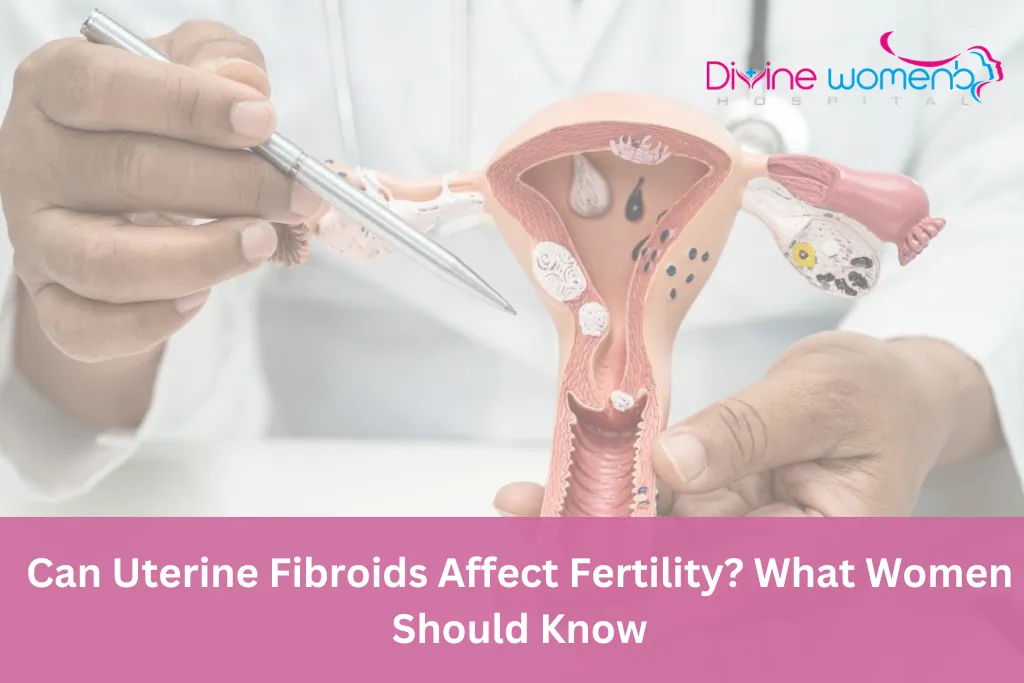
16 June 2026
Can Uterine Fibroids Affect Fertility? What Women Should Know
For many women, discovering they have uterine fibroids can raise concerns about future pregnancy plans. One of the most common questions gynecologists hear is: Can fibroids cause infertility? While not all fibroids affect reproductive health, certain types and locations can interfere with conception and pregnancy.
Read moreWe are here for you
Book a consultation with our women's health team in Ahmedabad
Obstetricians, gynecologists, fertility specialists and a neonatologist, with hospital staff available 24×7 for you and your baby.