
Adenomyosis Treatment in Ahmedabad
Heavy periods that soak through protection, cramping that has crept worse year after year, a lower abdomen that feels heavy and tender — adenomyosis is often lived with for years before it is named.
It is frequently mistaken for fibroids, or dismissed as ordinary period pain that you are expected to manage. It is neither. It is a specific condition with specific treatment.
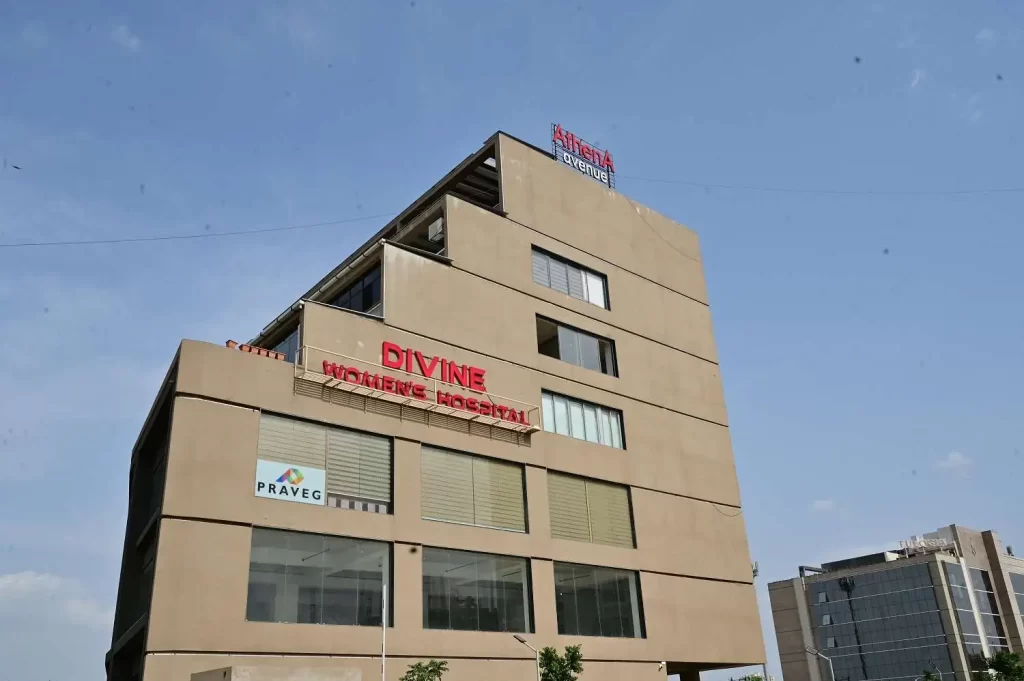
At Divine Women's Hospital, Ahmedabad, Dr. Devang Patel, Gynaecologist and Laparoscopic Surgeon, assesses how far the disease has spread, what your symptoms actually are, and whether you are planning a pregnancy before recommending anything.
Understanding Adenomyosis Beyond Heavy Periods
What Is Adenomyosis?
In adenomyosis, tissue similar to the lining of the uterus grows into the muscular wall of the uterus itself.
That tissue still responds to your monthly hormonal cycle. Each month it thickens and bleeds inside the muscle, where the blood has nowhere to go. Over time this causes inflammation, swelling and an enlarged, tender uterus.
The result is periods that become heavier and more painful, often gradually, over several years.
Why Does Adenomyosis Happen?
There is no single known cause. It is more commonly diagnosed in women who have had children, in those who have had previous uterine surgery including a caesarean section, and it becomes more likely with age until menopause.
Hormonal factors clearly play a part, since symptoms usually settle after menopause when oestrogen levels fall. As with endometriosis, adenomyosis is not caused by anything a woman has done or failed to do.
What Does Adenomyosis Feel Like?
| Symptom | What you may notice |
|---|---|
| Heavy periods | Bleeding that is heavier than it used to be, often with clots, sometimes needing frequent changes of protection. |
| Worsening period pain | Cramping that has become more severe over the years rather than staying the same. |
| A heavy, full feeling | Pressure or bloating low in the abdomen, sometimes with a visibly enlarged lower belly. |
| Pain during intercourse | Deep pelvic pain during or after sex. |
| Prolonged bleeding | Periods that last longer than they once did, or spotting between periods. |
| Tiredness | Fatigue or breathlessness, which may reflect anaemia from heavy blood loss. |
| Difficulty conceiving | Some women have trouble conceiving or carrying a pregnancy, particularly where the disease is widespread. |
Adenomyosis can look different in every woman, and some have no symptoms at all. Having one of these does not mean you have adenomyosis — but periods that have genuinely worsened over time deserve proper evaluation rather than stronger painkillers.
How Is Adenomyosis Diagnosed?
Diagnosis starts with your history: how your periods have changed, how much they affect your life, and what you have already tried. Depending on the picture, your gynaecologist may recommend:
- Clinical examination: the uterus in adenomyosis is often enlarged and tender.
- Transvaginal ultrasound: frequently shows characteristic changes in the uterine wall and helps separate adenomyosis from fibroids.
- MRI: useful where the picture is unclear, or to map how widespread the disease is before considering surgery.
- Blood tests: to check for anaemia if bleeding has been heavy.
- Hysteroscopy or laparoscopy: sometimes used to rule out other causes of bleeding or pain.
Adenomyosis and fibroids can exist together, and so can adenomyosis and endometriosis. Establishing which of them you actually have — or how many — is what makes the treatment plan work.
Adenomyosis Treatment Options
Treatment depends on how severe your symptoms are, your age, and whether you want to conceive.
- Medication for pain and bleeding: anti-inflammatory and antifibrinolytic medicines can reduce both.
- Hormonal treatment: including a hormone-releasing intrauterine device, which often reduces bleeding substantially.
- Treating anaemia: iron replacement where heavy bleeding has lowered your haemoglobin.
- Laparoscopic surgery: where localised disease can be excised, or where coexisting fibroids or endometriosis also need treatment.
- Hysterectomy: definitive treatment for widespread disease, considered only when childbearing is complete and other options have not worked.
Choosing Between Medical and Surgical Treatment
Adenomyosis is spread through the muscle of the uterus rather than sitting as a discrete lump, which is what makes it different from a fibroid. That is why it cannot always simply be 'removed'.
For many women, medical or hormonal treatment controls the bleeding and pain well enough that surgery is never needed. Where the disease is localised, surgery can target it. Where it is widespread and family is complete, hysterectomy is the only treatment that ends it definitively.
Before Considering Surgery
Your doctor will weigh:
- How severe the bleeding and pain actually are
- Whether medical treatment has been tried properly and for long enough
- How widespread the disease is on imaging
- Whether fibroids or endometriosis are present as well
- Your age and whether you want to conceive
- Your haemoglobin and general health
- Your own preference, once the options have been explained
Dr. Devang Patel | Gynaecologist & Adenomyosis Specialist

At Divine Women's Hospital, Ahmedabad, adenomyosis is treated as an individual picture rather than a single diagnosis with a single answer.
Dr. Devang Patel is a Gold Medalist in M.D. Obstetrics & Gynecology and an experienced laparoscopic surgeon. His approach starts with establishing exactly what is causing your symptoms — adenomyosis alone, or alongside fibroids or endometriosis — before treatment is decided.
Divine Women's Hospital provides gynaecological care with a focus on minimally invasive surgery and women's reproductive health.
Periods that have got worse every year are not something you simply have to accept.
If your periods have become heavier or more painful over time, an evaluation is the place to start.
Frequently Asked Questions
No, though they are related and often occur together. In endometriosis the tissue grows outside the uterus; in adenomyosis it grows into the uterine muscle. The symptoms overlap, which is why careful imaging matters — and why treating one while missing the other leaves you no better.
Related treatments
Why families across Gujarat trust Divine Women's Hospital
Choosing where to be cared for is a personal decision, and it usually comes down to one question: will someone actually listen to me? At Divine Women's Hospital, that is where every consultation begins. Our senior consultants stay with you from the first visit through recovery, so you never have to repeat your story to a new face.
One consultant, start to finish
The doctor who examines you is the doctor who plans your treatment and performs your procedure. Continuity is not a luxury here, it is the baseline.
Explained in plain language
Reports are walked through line by line, in Gujarati, Hindi or English, until the plan makes sense to you and the family member sitting beside you.
Modern theatre and imaging under one roof
Laparoscopy suites, fetal-medicine grade ultrasound, NICU support and 24x7 emergency cover mean fewer referrals and less waiting between steps.
Honest, itemised costs
You receive a written estimate before admission. If the plan changes, we tell you why before anything is done.
We are here for you
Book a consultation with Ahmedabad's trusted women's health team
Internationally certified obstetricians, gynecologists and fertility specialists, available 24×7 for you and your baby.