
Tubal Blockage Treatment in Ahmedabad
Blocked fallopian tubes rarely announce themselves. There is usually no pain, no change in your periods, nothing to notice — which is why tubal factor is most often found during a fertility evaluation rather than before one.
The tubes are where egg and sperm meet. If both are blocked, that meeting cannot happen, however regular your cycles are.
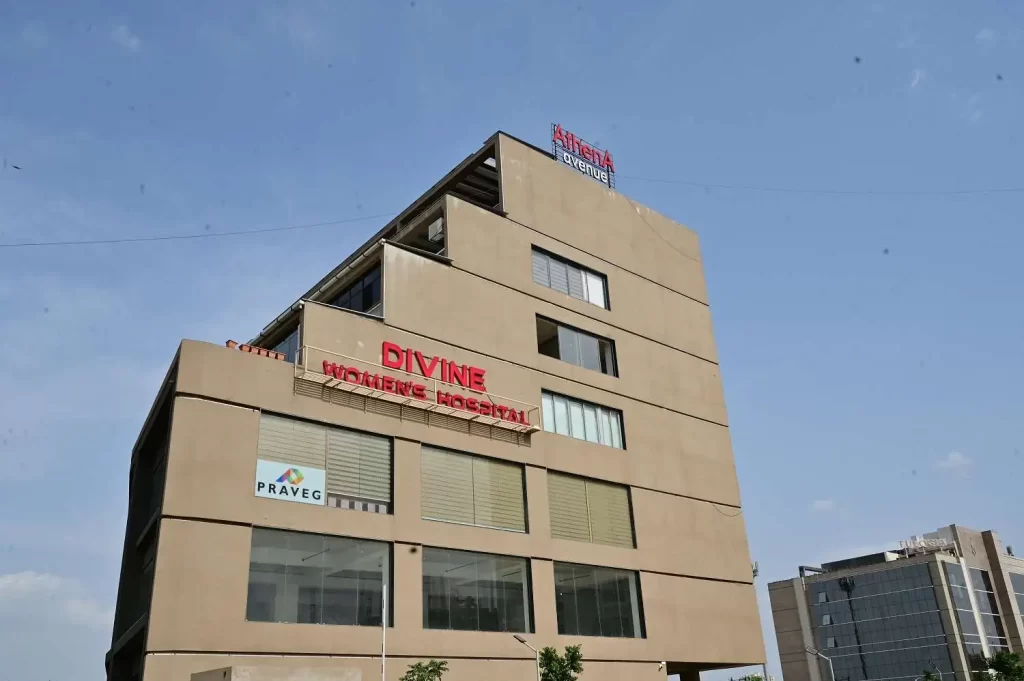
At Divine Women's Hospital, Ahmedabad, Dr. Devang Patel, Gynaecologist and Laparoscopic Surgeon, assesses where the blockage sits and how healthy the surrounding tissue is before recommending surgery or IVF.
Understanding Tubal Blockage and Tubal Factor Infertility
What Is Tubal Blockage?
The fallopian tubes carry the egg from the ovary towards the uterus. Fertilisation normally happens inside the tube, and the early embryo then travels down into the uterus to implant.
A blockage can sit at the end nearest the uterus, at the far end near the ovary, or anywhere along the tube. It may affect one tube or both.
Tubes can also be open but damaged — scarred, or with the delicate lining destroyed — which reduces their function even when dye passes through.
What Causes Tubal Blockage?
Common causes include:
- Previous pelvic infection, including pelvic inflammatory disease
- Endometriosis affecting the tubes or surrounding tissue
- Adhesions after previous abdominal or pelvic surgery, including appendicectomy or caesarean section
- A previous ectopic pregnancy
- Genital tuberculosis, which remains an important cause in India
- Hydrosalpinx — a tube blocked at the far end and filled with fluid
Many women have no history of any of these, which is why the tubes are checked as part of a standard fertility evaluation rather than only when something is suspected.
What Does Tubal Blockage Feel Like?
| Symptom | What you may notice |
|---|---|
| Usually no symptoms | Most blocked tubes cause nothing you would notice. |
| Difficulty conceiving | Often the only sign — regular cycles, nothing obviously wrong, but no pregnancy. |
| Pelvic pain | Some women have ongoing pelvic discomfort, particularly where endometriosis or adhesions are involved. |
| Painful periods | Where endometriosis is the underlying cause. |
| Unusual discharge | Occasionally, where a hydrosalpinx is present. |
| Previous ectopic pregnancy | A history of one suggests the tube may already be damaged. |
Because tubal blockage is usually silent, the absence of symptoms tells you nothing. If you have been trying to conceive for a year — or six months if you are over 35 — the tubes should be checked.
How Is Tubal Blockage Diagnosed?
Several tests assess the tubes, and they answer slightly different questions:
- HSG (hysterosalpingogram): dye is passed through the cervix and X-rays show whether it spills from the ends of the tubes.
- Sonosalpingography: a similar assessment using saline and ultrasound rather than X-ray.
- Laparoscopy with chromopertubation: the most definitive test. Dye is passed through the tubes while they are viewed directly, so we see where the blockage is and whether the surrounding tissue is healthy.
- Hysteroscopy: assesses the uterine cavity and the openings of the tubes from inside.
An HSG showing a blockage close to the uterus is not always a true blockage — spasm can mimic one. This is one reason laparoscopy is sometimes needed before concluding that surgery or IVF is required.
Tubal Blockage Treatment Options
The right treatment depends on where the blockage is, how damaged the tube is, and your wider fertility picture.
- Hysteroscopic tubal cannulation: where the blockage sits close to the uterus, it can sometimes be opened from inside.
- Laparoscopic surgery: to release adhesions, treat endometriosis, or open a tube blocked at the far end.
- Removal of a hydrosalpinx: a fluid-filled tube can reduce IVF success, and removing or clipping it before treatment improves the odds.
- IVF: bypasses the tubes entirely, and is usually the better route where both tubes are extensively damaged.
Surgery or IVF — Which Is Right
This is the decision that matters most, and it is where women are most often given surgery by default.
Surgery makes sense where the damage is limited, the tube is otherwise healthy, you are younger, and there is no significant male factor. Where both tubes are extensively damaged, where there is a hydrosalpinx, where ovarian reserve is falling or where sperm quality is a barrier as well, IVF gives a better chance in less time.
We would rather tell you that at the start than operate first and reach the same conclusion a year later.
What the Decision Depends On
Your consultant will weigh:
- Where the blockage sits and whether one or both tubes are affected
- Whether the tube is simply blocked or genuinely damaged
- Whether a hydrosalpinx is present
- Your age and ovarian reserve
- How long you have been trying to conceive
- The semen analysis result
- Whether endometriosis or adhesions also need treating
Dr. Devang Patel | Gynaecologist & Fertility Surgery Specialist

At Divine Women's Hospital, Ahmedabad, tubal surgery and IVF are run by the same team, so the decision between them is made on your chances rather than on which service you happened to walk into.
Dr. Devang Patel is a Gold Medalist in M.D. Obstetrics & Gynecology and an experienced laparoscopic surgeon. Findings from laparoscopy feed directly into the fertility plan rather than being handed on separately.
Divine Women's Hospital provides gynaecological care with a focus on minimally invasive surgery and women's reproductive health.
The question is not only whether a tube can be opened, but whether opening it will help you conceive.
If you have been trying to conceive without success, a fertility evaluation including the tubes is the place to start.
Frequently Asked Questions
Sometimes. A blockage close to the uterus may be opened hysteroscopically, and adhesions or endometriosis distorting the tubes can often be treated laparoscopically. Extensive damage along the length of the tube is much less likely to be repairable.
Related treatments
Why families across Gujarat trust Divine Women's Hospital
Choosing where to be cared for is a personal decision, and it usually comes down to one question: will someone actually listen to me? At Divine Women's Hospital, that is where every consultation begins. Our senior consultants stay with you from the first visit through recovery, so you never have to repeat your story to a new face.
One consultant, start to finish
The doctor who examines you is the doctor who plans your treatment and performs your procedure. Continuity is not a luxury here, it is the baseline.
Explained in plain language
Reports are walked through line by line, in Gujarati, Hindi or English, until the plan makes sense to you and the family member sitting beside you.
Modern theatre and imaging under one roof
Laparoscopy suites, fetal-medicine grade ultrasound, NICU support and 24x7 emergency cover mean fewer referrals and less waiting between steps.
Honest, itemised costs
You receive a written estimate before admission. If the plan changes, we tell you why before anything is done.
We are here for you
Book a consultation with Ahmedabad's trusted women's health team
Internationally certified obstetricians, gynecologists and fertility specialists, available 24×7 for you and your baby.