
Infertility Laparoscopy in Ahmedabad
Not every fertility evaluation needs laparoscopy. It is used when what we can see from outside does not explain why you are not conceiving.
Its value is that it both finds and treats the physical causes — endometriosis, adhesions, tubal disease — in a single procedure, with the findings feeding straight into your fertility plan.
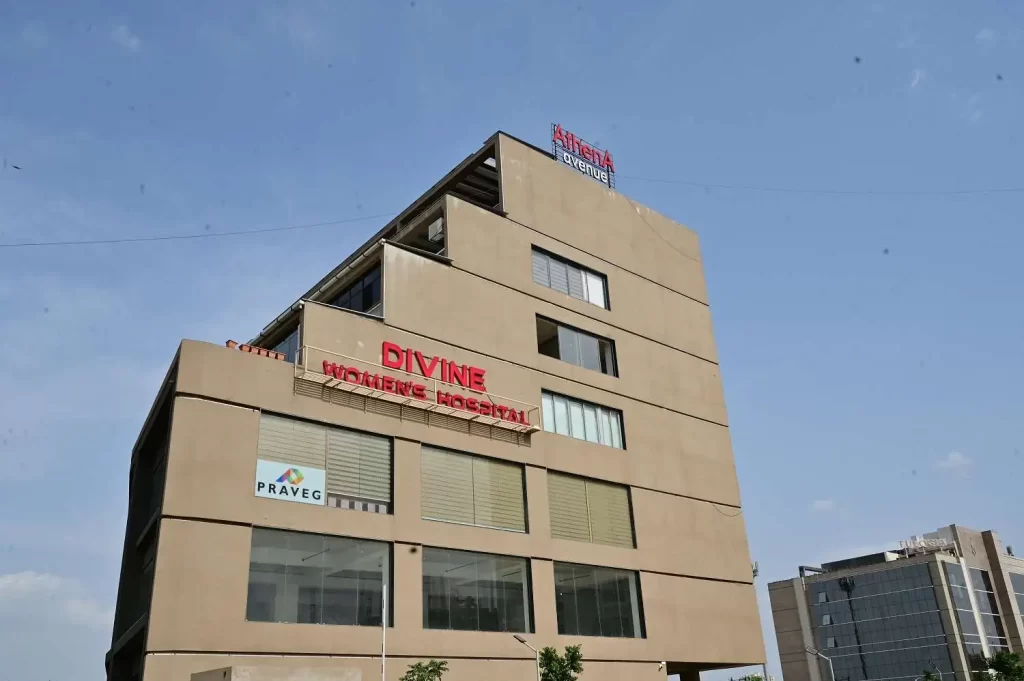
At Divine Women's Hospital, Ahmedabad, Dr. Dipesh Sorathiya, IVF and Infertility Specialist, performs fertility laparoscopy alongside running the IVF programme.
What Is Infertility Laparoscopy?
It is gynecological laparoscopy used specifically to investigate and treat the physical causes of infertility — a keyhole examination of the uterus, ovaries, tubes and surrounding pelvis.
It is not a routine step before every IVF cycle. It is advised when treating what we find would genuinely improve your chance of conceiving, naturally or with treatment.
What It Can Find and Treat
| Finding | What is done |
|---|---|
| Tubal patency | Dye is passed through the tubes under direct vision to confirm whether they are open and healthy |
| Endometriosis | Often invisible on ultrasound; deposits are treated in the same procedure |
| Pelvic adhesions | Scar tissue distorting the tubes and ovaries is released |
| Hydrosalpinx | A fluid-filled tube can be removed or clipped, which improves IVF outcomes |
| Ovarian drilling for PCOS | An option in selected cases where ovulation has not responded to medication |
| Ovarian cysts and endometriomas | Removed while preserving healthy ovarian tissue |
Where It Fits in a Fertility Plan
Timing matters more than most people are told. Laparoscopy is worth doing when treating the findings will improve your chance of conceiving naturally or with IUI.
Where ovarian reserve is falling, where the male factor is significant, or where both tubes are extensively damaged, going directly to IVF is usually the better use of your time. We would rather say that than operate first and reach the same conclusion a year later.
One exception is worth knowing: a hydrosalpinx is generally best dealt with before an IVF cycle, because the fluid can reduce the chance of an embryo implanting.
What to Expect and Recovery
The procedure is done under general anaesthesia and typically takes under an hour, longer where extensive treatment is needed. It is usually scheduled in the first half of your cycle.
Because the incisions are small, most women are mobile within hours and back to routine activity considerably sooner than after open surgery. Your team will give you a timeline for your own procedure rather than a general figure. Findings are explained to you afterwards along with what they mean for your next step.
Surgery or Straight to IVF?
This is the decision that matters, and it is where women are most often given surgery by default. Both routes are legitimate; the right one depends on your specific findings and, above all, on time.
Surgery makes sense where damage is limited, the pelvis is otherwise healthy, you are younger and there is no significant male factor. Where those conditions are not met, IVF gives a better chance in less time — and time is the one thing that cannot be recovered.
What the Decision Depends On
Your consultant will weigh:
- Your age and ovarian reserve
- How long you have been trying to conceive
- Whether one or both tubes are affected, and how badly
- Whether a hydrosalpinx is present
- The semen analysis result
- Whether endometriosis or adhesions are likely
- Previous surgery and its findings
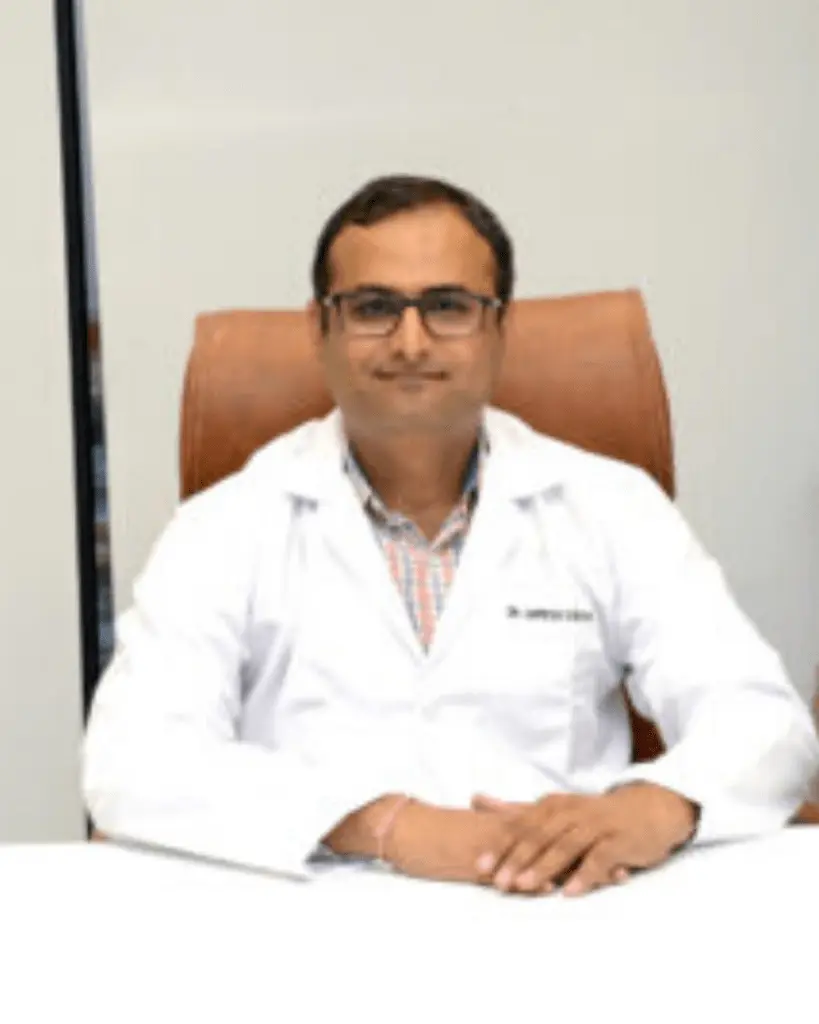
Dr. Dipesh Sorathiya | Gynaecologist & Fertility Surgery Specialist
At Divine Women's Hospital, Ahmedabad, the same team runs the endoscopy and the IVF programme — so surgical findings feed directly into your fertility plan rather than being handed on separately.
Dr. Dipesh Sorathiya holds an M.S. in Obstetrics & Gynecology, a Diploma in ART & IVF from the UK and a Diploma in Gynec Endoscopy (CICE).
Divine Women's Hospital provides fertility care with in-house embryology and andrology laboratories under one roof.
The question is not whether we can operate. It is whether operating improves your chance of a baby.
If your fertility evaluation has raised a question that scans cannot answer, book a consultation.
Frequently Asked Questions
Not usually. It is advised where a finding would change the plan — suspected endometriosis, adhesions, or a hydrosalpinx that should be dealt with before a cycle. Otherwise it adds an operation without improving your chances.
Related treatments
Why families across Gujarat trust Divine Women's Hospital
Choosing where to be cared for is a personal decision, and it usually comes down to one question: will someone actually listen to me? At Divine Women's Hospital, that is where every consultation begins. Our senior consultants stay with you from the first visit through recovery, so you never have to repeat your story to a new face.
One consultant, start to finish
The doctor who examines you is the doctor who plans your treatment and performs your procedure. Continuity is not a luxury here, it is the baseline.
Explained in plain language
Reports are walked through line by line, in Gujarati, Hindi or English, until the plan makes sense to you and the family member sitting beside you.
Modern theatre and imaging under one roof
Laparoscopy suites, fetal-medicine grade ultrasound, NICU support and 24x7 emergency cover mean fewer referrals and less waiting between steps.
Honest, itemised costs
You receive a written estimate before admission. If the plan changes, we tell you why before anything is done.
We are here for you
Book a consultation with Ahmedabad's trusted women's health team
Internationally certified obstetricians, gynecologists and fertility specialists, available 24×7 for you and your baby.