
Female Infertility Treatment in Ahmedabad
Regular cycles, nothing obviously wrong, and still no pregnancy. Or irregular cycles you have been told to live with. Or a diagnosis handed over without anyone explaining what it means for your chances.
Female infertility is not one condition. It is several quite different problems that share a single outcome — and treatment only works once the evaluation has established which one you actually have.
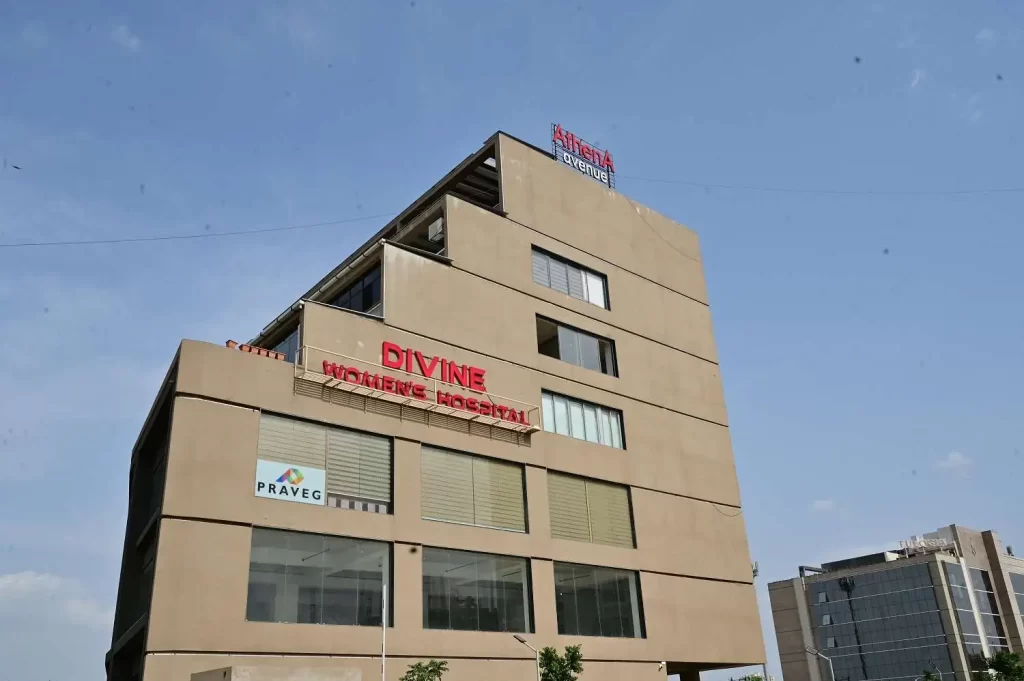
At Divine Women's Hospital, Ahmedabad, Dr. Dipesh Sorathiya, IVF and Infertility Specialist, works through that evaluation properly before recommending treatment.
Understanding Female Infertility
What Is Female Infertility?
Infertility is usually defined as not conceiving after a year of regular unprotected intercourse — or six months if you are over 35, because time matters more then.
Conception needs several things to work together: an egg released each cycle, an open route for egg and sperm to meet, a uterus able to carry a pregnancy, and adequate sperm. A problem in any one of these can prevent it.
The purpose of an evaluation is to find which link is affected. Treating the wrong one is the most common reason fertility treatment fails.
The Main Causes
Female infertility usually traces to one of these:
- Ovulation disorders — most commonly PCOS, but also thyroid and prolactin problems
- Tubal factor — blocked or damaged fallopian tubes, often after infection or surgery
- Endometriosis — which can affect the tubes, the ovaries and implantation
- Uterine factors — fibroids, polyps, a septum or intrauterine adhesions
- Diminished ovarian reserve — fewer eggs remaining, which becomes more likely with age
- Unexplained infertility — where all tests are normal, which is a real and reasonably common finding
What You May Notice
| Symptom | What you may notice |
|---|---|
| Difficulty conceiving | Often the only sign, with nothing else out of the ordinary. |
| Irregular or absent periods | Cycles shorter than 21 days or longer than 35, or periods that skip — usually pointing to ovulation. |
| Very painful periods | Pain that disrupts daily life can point to endometriosis or adenomyosis. |
| Heavy periods | May suggest fibroids, adenomyosis or a hormonal cause. |
| Pain during intercourse | Deep pain is associated with endometriosis and pelvic adhesions. |
| Recurrent miscarriage | Repeated early losses need their own evaluation, not simply more attempts. |
| Acne, weight gain, excess hair | Suggests a hormonal picture such as PCOS. |
Many women with infertility have no symptoms at all. Do not wait for one — a year of trying, or six months if you are over 35, is the point to be evaluated.
How Is Female Infertility Diagnosed?
A fertility evaluation is a defined set of tests, usually completed within a cycle or two:
- History and examination: cycle pattern, previous pregnancies, surgery, infections and medical conditions.
- Hormone tests: including thyroid and prolactin, and tests of ovarian reserve such as AMH.
- Transvaginal ultrasound: assesses the uterus, the ovaries and the antral follicle count.
- Ovulation confirmation: to establish whether you are releasing an egg each cycle.
- Tubal assessment: HSG, sonosalpingography or laparoscopy with dye.
- Hysteroscopy: where the cavity needs to be seen directly.
- Semen analysis for your partner: always, and early.
The evaluation should be finished before treatment starts. Beginning ovulation induction without knowing whether the tubes are open, or what the semen analysis shows, wastes cycles you may not have to spare.
Female Infertility Treatment Options
Treatment follows the cause rather than a fixed ladder.
- Ovulation induction: medication to trigger ovulation where cycles are anovulatory, commonly in PCOS.
- Lifestyle and weight management: which genuinely improves outcomes in PCOS and in unexplained infertility.
- Surgery: laparoscopic or hysteroscopic treatment of endometriosis, adhesions, fibroids or polyps.
- IUI: where tubes are open, sperm parameters are reasonable and the problem is mild.
- IVF and ICSI: where tubes are blocked, ovarian reserve is falling, the male factor is significant, or simpler treatment has not worked.
How the Treatment Plan Is Decided
Age is the single most important factor, because ovarian reserve declines with it and no treatment reverses that. The second is what the evaluation actually found.
For a younger woman with open tubes and a normal semen analysis, ovulation induction or IUI is reasonable and worth several cycles. Where tubes are blocked, ovarian reserve is low, or the male factor is significant, going directly to IVF is usually the better use of time — and we would rather say that at the start than after a year of cycles that were never likely to work.
What the Decision Depends On
Your consultant will weigh:
- Your age, and how long you have been trying
- Ovarian reserve on AMH and antral follicle count
- Whether you ovulate regularly
- Whether your tubes are open and healthy
- The state of the uterine cavity
- Your partner's semen analysis
- Previous treatment and how you responded
- Your own view on cost, time and how invasive you are willing to go
Dr. Dipesh Sorathiya | Gynaecologist & Fertility Specialist

At Divine Women's Hospital, Ahmedabad, the fertility evaluation is completed before treatment is recommended — and the recommendation is based on your realistic chances, not on a standard sequence.
Dr. Dipesh Sorathiya holds an M.S. in Obstetrics & Gynecology, a Diploma in ART & IVF from the UK and a Diploma in Gynec Endoscopy. Because the same team runs the endoscopy and the IVF programme, surgical findings feed directly into your fertility plan.
Divine Women's Hospital provides fertility care with in-house embryology and andrology laboratories under one roof.
Treatment works when it is aimed at the right cause. Finding that is the first job, not a formality.
If you have been trying to conceive for a year — or six months if you are over 35 — a fertility evaluation is the place to start.
Frequently Asked Questions
After a year of regular unprotected intercourse without conceiving, or after six months if you are over 35. Come sooner if your periods are irregular or absent, if you have known endometriosis or PCOS, or if you have had pelvic surgery, infection or an ectopic pregnancy.
Related treatments
Why families across Gujarat trust Divine Women's Hospital
Choosing where to be cared for is a personal decision, and it usually comes down to one question: will someone actually listen to me? At Divine Women's Hospital, that is where every consultation begins. Our senior consultants stay with you from the first visit through recovery, so you never have to repeat your story to a new face.
One consultant, start to finish
The doctor who examines you is the doctor who plans your treatment and performs your procedure. Continuity is not a luxury here, it is the baseline.
Explained in plain language
Reports are walked through line by line, in Gujarati, Hindi or English, until the plan makes sense to you and the family member sitting beside you.
Modern theatre and imaging under one roof
Laparoscopy suites, fetal-medicine grade ultrasound, NICU support and 24x7 emergency cover mean fewer referrals and less waiting between steps.
Honest, itemised costs
You receive a written estimate before admission. If the plan changes, we tell you why before anything is done.
We are here for you
Book a consultation with Ahmedabad's trusted women's health team
Internationally certified obstetricians, gynecologists and fertility specialists, available 24×7 for you and your baby.