
High-Risk Pregnancy Care in Ahmedabad
Being told your pregnancy is high-risk is frightening in a way the words themselves do not justify. It does not mean something will go wrong.
It means you and your baby need closer monitoring than routine antenatal care provides — more scans, more visits, and a team ready to act sooner if anything changes.
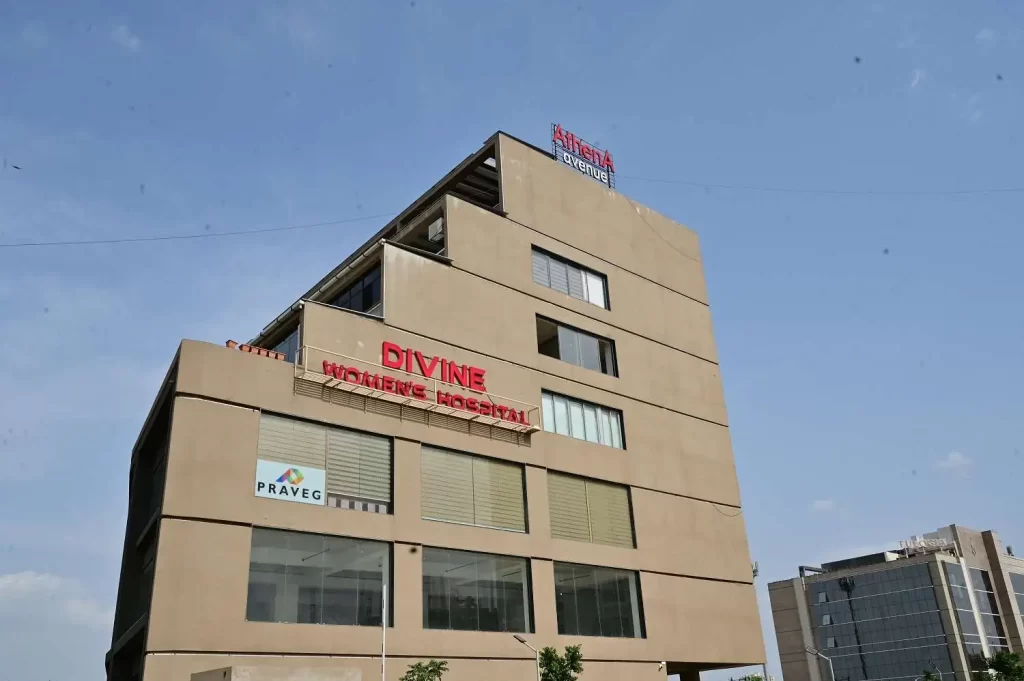
At Divine Women's Hospital, Ahmedabad, Dr. Devang Patel holds an FNB in High Risk Pregnancy and Perinatology, with a dedicated operation theatre and NICU support on site.
Understanding High-Risk Pregnancy
What Is High-Risk Pregnancy?
A pregnancy is called high-risk when a factor in your health, your baby's development or your obstetric history increases the chance of complications for either of you.
The label is a plan, not a prediction. It changes how often you are seen, what is monitored, which scans are done and where you deliver — and most high-risk pregnancies end with a healthy mother and a healthy baby.
Some pregnancies are high-risk from the first visit. Others become so partway through, which is why monitoring continues throughout rather than stopping once the early scans look normal.
What Makes a Pregnancy High-Risk?
The common reasons fall into a few groups:
- Conditions arising in pregnancy — gestational diabetes, pregnancy-induced hypertension, pre-eclampsia, or a baby growing more slowly than expected
- Existing medical conditions — thyroid disease, diabetes, heart disease, epilepsy, kidney disease or an autoimmune disorder
- Obstetric history — a previous caesarean section, recurrent miscarriage, previous preterm birth or a previous stillbirth
- This pregnancy itself — twins or a multiple pregnancy, placenta praevia, or too much or too little amniotic fluid
- Maternal factors — age under 18 or over 35, significant obesity, or severe anaemia
Having one of these does not mean you will have a complication. It means we watch for it deliberately rather than hoping to notice in time.
Warning Signs You Should Never Wait On
| Symptom | What you may notice |
|---|---|
| Reduced baby movements | Fewer movements than usual, or a clear change in the pattern — the most important sign to report. |
| Bleeding | Any vaginal bleeding at any stage of pregnancy. |
| Severe headache or visual changes | Especially with swelling — can indicate pre-eclampsia. |
| Sudden swelling | Of the face, hands or feet, appearing quickly. |
| Fluid leaking | A gush or steady trickle, which may mean your waters have broken. |
| Severe abdominal pain | Constant pain, or pain that is different from normal tightening. |
| Fever | Temperature with or without burning on passing urine. |
Do not wait for your next appointment with any of these. Call us on +91 90545 74829 at any hour — we would far rather check something that turns out to be normal.
How Is High-Risk Pregnancy Diagnosed?
High-risk pregnancy is identified partly at booking and partly through ongoing monitoring:
- Booking history and examination: medical conditions, previous pregnancies, medications and family history.
- Booking bloods: haemoglobin, blood group and antibodies, thyroid function, blood sugar and infection screening.
- NT-NB scan at 11–14 weeks: assessing growth and screening for chromosomal conditions. Dr. Devang Patel is accredited for Nuchal Translucency scanning by the Fetal Medicine Foundation, UK.
- Anomaly scan at 18–22 weeks: a detailed look at your baby's organs and structure.
- Glucose tolerance testing: screening for gestational diabetes.
- Growth and Doppler scans: tracking growth and checking blood flow through the placenta and cord.
- Blood pressure and urine checks at every visit: the simplest and most useful screening for pre-eclampsia.
Fetal medicine assessment is available in-house through our fetal medicine service, so scanning and interpretation happen with the same team rather than across referrals.
High-Risk Pregnancy Treatment Options
Management depends on the specific risk, and usually combines closer monitoring with treatment of the underlying problem.
- More frequent antenatal visits: so changes are picked up early rather than at a routine interval.
- Treating the condition: medication and dietary management for gestational diabetes, antihypertensives for raised blood pressure, thyroid replacement, iron for anaemia.
- Serial growth and Doppler scans: where the baby's growth or placental function is a concern.
- Steroids for lung maturity: where early delivery is anticipated.
- Planned delivery: timing and mode chosen for your specific situation, with a dedicated operation theatre available.
- NICU support: with a consultant neonatologist for babies who need care after birth.
How a High-Risk Pregnancy Is Managed Here
The point of high-risk care is to catch a problem while it is still small. That means more visits, more scans, and a lower threshold for asking you to come in — which can feel like fuss until the one time it matters.
Because scanning, fetal medicine assessment, the operation theatre and NICU are all on site, a change in your condition does not mean arranging a transfer. The same consultant follows you throughout rather than handing you between services.
What Shapes Your Plan
Your consultant will weigh:
- Which specific risk factor or factors apply to you
- How your baby is growing and how the placenta is functioning
- Your blood pressure, blood sugar and haemoglobin
- What happened in any previous pregnancies
- How many weeks you are, and whether delivery may need to be early
- Whether NICU support is likely to be needed
- Your own preferences on delivery, discussed well before labour
Dr. Devang Patel | Gynaecologist & High-Risk Pregnancy Specialist

At Divine Women's Hospital, Ahmedabad, high-risk pregnancy is managed with closer monitoring rather than more anxiety — you should finish each visit knowing what is being watched and why.
Dr. Devang Patel is a Gold Medalist in M.D. Obstetrics & Gynecology and holds an FNB in High Risk Pregnancy and Perinatology, with Nuchal Translucency accreditation from the Fetal Medicine Foundation, UK.
A dedicated operation theatre and NICU support are available on site, with staff present around the clock.
High-risk means watched more closely. It does not mean something is going to go wrong.
If your pregnancy has been called high-risk, or you have a condition that may affect it, book an antenatal consultation.
Frequently Asked Questions
No. Many women with high-risk pregnancies have a normal vaginal delivery. The mode of delivery is decided on your specific situation and how labour progresses, not on the label itself.
Related treatments
Why families across Gujarat trust Divine Women's Hospital
Choosing where to be cared for is a personal decision, and it usually comes down to one question: will someone actually listen to me? At Divine Women's Hospital, that is where every consultation begins. Our senior consultants stay with you from the first visit through recovery, so you never have to repeat your story to a new face.
One consultant, start to finish
The doctor who examines you is the doctor who plans your treatment and performs your procedure. Continuity is not a luxury here, it is the baseline.
Explained in plain language
Reports are walked through line by line, in Gujarati, Hindi or English, until the plan makes sense to you and the family member sitting beside you.
Modern theatre and imaging under one roof
Laparoscopy suites, fetal-medicine grade ultrasound, NICU support and 24x7 emergency cover mean fewer referrals and less waiting between steps.
Honest, itemised costs
You receive a written estimate before admission. If the plan changes, we tell you why before anything is done.
We are here for you
Book a consultation with Ahmedabad's trusted women's health team
Internationally certified obstetricians, gynecologists and fertility specialists, available 24×7 for you and your baby.